

The Barber of Seville Listening Guide: 5 Musical Moments Explained
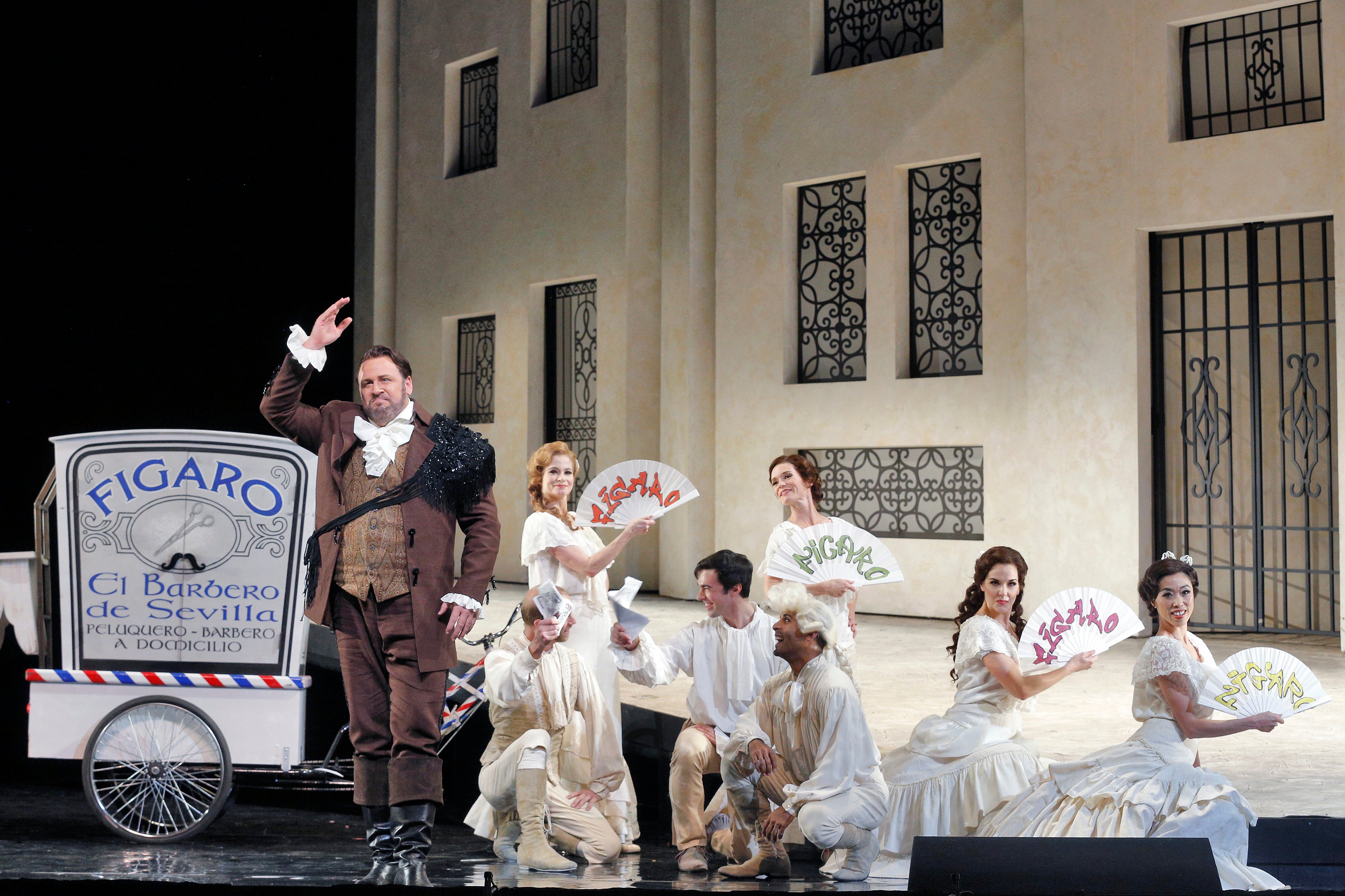
The year is 1816. In Rome, the nearly 24-year-old composer Gioachino Rossini has just begun work on what will become his most famous opera: Il barbiere di Siviglia, or The Barber of Seville. Opera in early nineteenth-century Rome is a commercial machine, and Rossini isn’t waiting for inspiration to strike. New works are churned out on brutal deadlines for impresarios who answer first to their paying audiences.
Rossini would complete the entire opera in a matter of weeks. The result? One of the most perfectly engineered comedies in the repertoire.
The comedy isn't carried by the story alone—it's built directly into the music. Rhythms repeat and accelerate, phrases bounce between characters, and the orchestra keeps nudging the action forward until the story seems to move faster than the characters can keep up.
This is the Italian bel canto tradition at work. Where other styles prize vocal power and weight, bel canto demands agility, precision, and athleticism. And Rossini exploits that flexibility to turn musical technique into character. The faster the music moves, the sharper the wit on stage.
Which makes Figaro’s entrance the perfect place to start listening.
Figaro’s Aria “Largo al factotum” (Act I)
Largo al factotum: Lucas Meachem (Figaro)
Rossini’s The Barber of Seville opens with one of opera’s great entrances. Figaro doesn’t enter quietly—he takes over. Before Figaro has finished a single thought, Rossini’s score tells us exactly who he is: always talking, always one step ahead, always in demand. “Largo al factotum” is arguably one the most famous baritone arias in the repertoire.
Listen for the rapid-fire delivery of text, known as patter singing. Every breathless phrase is Figaro telling you exactly how indispensable he is, and you're hanging on to every word. The orchestra keeps pushing forward underneath it all, never quite settling.
What to listen for:
• The breathless, machine-gun delivery of text — that's patter singing
• How the orchestra never quite settles underneath him
By the end of the aria, Figaro hasn’t just introduced himself—he’s taken control of the opera.
Rosina’s Aria “Una voce poco fa” (Act I)
Io sono docile: Daniela Mack (Rosina)
Rosina’s entrance works differently. Where Figaro overwhelms us with energy, she reveals herself in layers in one of The Barber of Seville's most beloved arias: “Una voce poco fa”.
This excerpt begins with the second half of her aria, the faster section known as the cabaletta. The slower opening—the cantabile—presents the image of a sweet, obedient young woman, the one Count Almaviva sees. The cabaletta is where we see beyond the facade.
Listen to how agile and ornamented the vocal line becomes. The music moves quickly, with sharp turns and flourishes that feel deliberate rather than decorative. This isn’t just a display of vocal ability. It’s Rosina’s character embedded directly into the music.
What to listen for:
• The shift in energy when the cabaletta begins — notice how the tempo and character change almost instantly
• Ornaments that feel like decisions, not decoration — sharp turns and flourishes that tell you exactly what Rosina is thinking
In bel canto, ornamentation is expression, and no two singers ornament it the same way. Every run and embellishment is a decision, and those decisions tell you exactly who Rosina is.
Act I Finale “E il cervello poverello”
E il cervello poverello (Act I Finale): Full cast, with San Francisco Opera Chorus Men
By the end of the first act, everything is unraveling at once. Plans collide, tempers flare, and no one is listening to anyone else. The Act I finale of Rossini’s The Barber of Seville is one of opera’s most famous ensemble scenes.
This excerpt drops us into the final stretch of the scene, where Rossini’s comic engine is already in full motion. Listen for how the music is built: a short rhythmic idea repeats, then repeats again, each time gaining energy as more voices join in.
This is the famous Rossini crescendo. Not just getting louder, but getting busier. Lines overlap, characters interrupt each other, and the orchestra keeps everything moving forward.
But underneath the chaos on the surface, every entrance is timed and every layer is carefully placed. Try to follow a single voice as the section builds. At some point, you'll lose the thread—but that's the point: eventually, the music swallows everyone whole.
What to listen for:
• A short rhythmic idea that repeats and builds — that's the Rossini crescendo engine starting up
• The moment the texture shifts from busy to overwhelming — it happens faster than you expect
By the end, the entire stage is swept into the same musical current—spinning faster and faster until it finally tips over.
Trio “Zitti zitti, piano piano”
Zitti, zitti: Daniela Mack (Rosina), Rene Barbera (Count Almaviva), Lucas Meachem (Figaro)
After the chaos of the Act I finale, this Act II trio, “Zitti zitti, piano piano” feels like a collective exhale.
Rosina, Figaro, and the Count are trying to escape. Quietly. That’s the joke Rossini puts right on the surface: three people singing about silence.
Except they aren’t singing at full volume. That’s what makes this worth listening to closely.
“Zitti zitti” is marked pianissimo—as soft as possible. After the wall of sound that closed Act I, the restraint is almost disorienting. The orchestra pulls back, the voices drop, and the whole theater seems to shrink.
Listen for the moments when the music threatens to swell and then catches itself—the characters forgetting, just for a second, that they're supposed to be invisible. They hush each other mid-phrase, and the score does the same. It keeps pulling back from the edge.
What to listen for:
• How soft it actually is — after the Act I finale, the quiet is almost shocking
• The moments when the music starts to swell and pulls itself back — that's the characters catching themselves
• All three voices moving together rather than interrupting each other — it's the first time that's happened
There’s something else worth noticing here. For most of the opera, these three characters are pulling against each other in slightly different directions. Here, they finally align. The voices move together, lining up instead of interrupting.
Act II Finale “Di sì felice innesto”
Di sì felice innesto (Act II Finale): Lucas Meachem (Figaro), and full cast
We end where we began: with Figaro.
He opens this section of the Act II finale alone, and for a moment the opera holds its breath. Everything that’s been hurtling forward at full speed—the disguises, the schemes, the near-misses—suddenly has room to settle.
Listen to how different he sounds here from his entrance in Act I. The rapid-fire energy is gone. This is Figaro after the work is done: not selling himself, but satisfied with himself.
What follows is the ensemble resolving around him. Voices enter one by one, each finding its place without interruption. After everything you’ve heard, the clarity is almost startling.
This is what resolution sounds like in bel canto. Not a confrontation, but a gradual settling, like a room going quiet after a long argument.
What to listen for:
• How different Figaro sounds compared to his entrance — same voice, completely different energy
• The flamenco dancing underneath the ensemble — joyful, grounded, unlike anything else in the opera, and specific to this production
Rossini wraps everything up with characteristic efficiency. The Count gets Rosina. Bartolo gets outwitted. Figaro gets the last word. In this production, you'll also hear something unexpected: flamenco dancing woven into the finale, a rhythm that feels both celebratory and inevitable. It's a happy ending, and the music makes sure you feel every bit of it.
Rossini wrote Il barbiere di Siviglia—The Barber of Seville—in under three weeks. Audiences have been returning to it for two hundred years. That's not an accident. That's a perfectly set trap, and you're about to walk right into it.