

The Supreme Test: Rigoletto Demands Everything From A Verdi Baritone
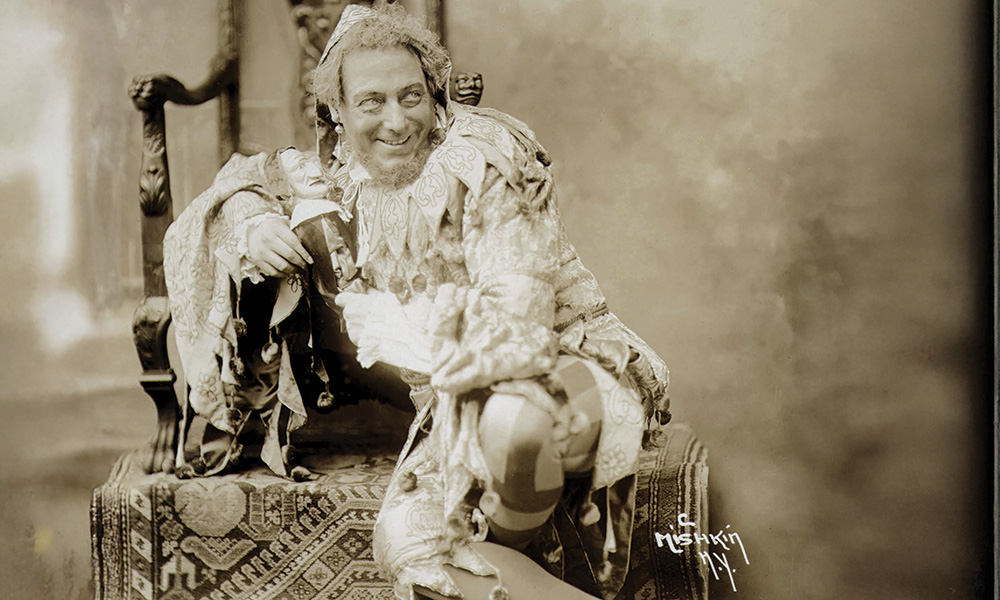
Just as actors long to portray Hamlet, baritones dream of singing the operas of Verdi, with all their opportunities for vocal glory. Among more than twenty possible roles, Rigoletto poses the most formidable challenge. A singer who can successfully portray Rigoletto onstage is really the king of baritones, provided he has the voice, technique, theatricality, and stamina to go the distance.
Any baritone with the potential to excel as Rigoletto should build up to it, since taking it on too soon is as misguided as a sprinter attempting a marathon. Terrific power and wide range are needed to produce the thrills an audience expects (although several high notes we usually hear from Rigoletto are actually interpolations that Verdi didn’t write). Unlike many of Verdi’s previous baritone roles, baritones singing Rigoletto can’t get away with a “stand-and-deliver” approach. The character must be presented in extraordinary detail, and that means acting not just through physicality but through the voice itself.
Given that Verdi baritones are uncommon at any given time, how do we know when we’re hearing the real thing? We all recognize vocal beauty—“velvet,” to use an even more specific descriptor—when we hear it, and a true Verdi baritone’s voice boasts that velvet in abundance. But there also must be strength in the sound to cut through a large orchestra, yet without distorting the voice to do it.
So while the Verdi baritone needs that power, he also needs finesse to produce such deeply expressive phrasing that he instantly reaches the listener’s heart. And when he moves from a fervent aria or duet right into what’s known as a cabaletta—fast-moving, aggressive music (the hair-raising music in the Act II finale of Rigoletto, for example)—he needs huge energy. His rhythms must be absolutely exact, but he also should give the impression, vocally speaking, that he’s throwing caution to the wind!
Have you ever wondered where the word “baritone” originated? We owe it to the ancient Greeks (barytonos can be roughly translated as “deep-sounding” or “heavy-toned”). Fifteenth-century composers used the baritone in choral music, but it took a few more centuries for him to find his way in opera. Look at Handel—no baritones! The lower-voiced male characters were all basses. It’s largely the same in Mozart, with the exception of The Marriage of Figaro, Don Giovanni, and The Magic Flute.
Moving to the 1810s, we find the baritone very slowly emerging in Italian opera, even if Rossini roles at that time didn’t require a particularly extensive vocal or dramatic range. Rossini created something more grand for the voice type in his final opera, Guillaume Tell (1829), in which the famous sharpshooter of the title was, at long last, a full-blown baritone protagonist, with his sizeable, velvety sound enhanced by expressive eloquence. Taking their cue from Guillaume Tell, Rossini’s successors—like Bellini and especially Donizetti—asked baritones for a bigger, broader sound.
So the stage was set for Verdi with his third opera, Nabucco (1842). Its larger-than-life title role gave audiences their first taste of the voice we recognize today as the Verdi baritone. With Nabucco and other baritone roles over the next decade, Verdi was composing in a fairly unsubtle style. Macbeth (1847) is the most demanding of those roles, but Rigoletto (1851) is on a different plane altogether, given the vocalism and artistry required.
As far as the role’s physicality is concerned, most productions in the past couple of decades have made things significantly easier for the singer by moving away from the hunchback that audiences had been seeing onstage for 150 years. The “other-ness” of Rigoletto as a human being now comes from the inside out, rather than from external physical characteristics. That de-emphasis on visible deformity, which had made the role terribly demanding for the singer, has allowed him to concentrate to a greater extent on acting through voice and text to bring the character to life in performance.
A great Rigoletto’s tasks begin with complete mastery of the score. Luckily, Verdi has done a lot of the work, providing vital expressive markings to be observed in virtually every bar, almost as if cajoling the baritone into achieving expressive variety.
Expressive variety—what does that really mean? Well, look at the greatest actors, especially in Shakespeare: for example, Laurence Olivier, whom we can enjoy on film as Henry V, Hamlet, Richard III, and Othello. Olivier cared profoundly about the vocal side of his characters, and in those four roles, he played on his voice like an instrument. Whether the character was loving, insinuating, mysterious, or violent, every possible color in the voice was utilized.
All of that can apply to Rigoletto, except that, unlike Olivier (who could create his own tempos and rhythms in delivering any text), the Verdi baritone has less interpretive flexibility, since he’s tied to the specifications of the score. For example, he doesn’t have the freedom to add a huge pause if inspired to do so, since the music doesn’t allow him to stop for that purpose.. Within those parameters, however, he can achieve wondrous vocal acting.
The opening scene shows Rigoletto, the court jester, in action, and the artist must transform his usual rich, velvety tone to project a nasty sarcasm through the voice. When he’s mocking Count Monterone, Verdi asks him to sing “con caricatura,” even throwing in two quick but incisive trills to drive home the point. Toward the end of the scene, Monterone curses Rigoletto, whose voice now needs the maximum in sheer terror.
Greater challenges await in the second scene of Act I. Rigoletto’s first line requires a long crescendo/decrescendo (increase/decrease in volume) on the opening phrase, “Quel vecchio maledivami” (“That old man cursed me”). Here we’re instantly aware of vocal technique working to enhance characterization. It’s tricky to execute that phrase satisfactorily, let alone to color it with the fear that continues to haunt Rigoletto. The rest of the scene can show the extent of the baritone’s gifts as a singing actor, the voice reflecting very different emotional responses: there’s the almost uneasy fascination when conversing with the hired assassin, Sparafucile; the agonized monologue, “Pari siamo,” which can penetrate deeply into the heart of this tortured man through a line-by-line response to the text; and, above all, the first of three duets with Gilda, showing Rigoletto not as a jester but as a father. There, in sharp contrast to what we’ve just heard, Verdi provides an opportunity for streams of glowing sound during the soulful passage in which Rigoletto recalls his dead wife. That portion of the duet exemplifies the tendency for Rigoletto’s music to “sit” consistently higher in the voice than any other Verdi baritone role preceding it.
In the Gilda/Rigoletto duets, “chemistry” can really make the difference in depicting this relationship onstage. The baritone may be the protagonist, but he must respond to his partner vocally, musically, and dramatically. Verdi composed quite a few soprano/baritone duets, but none of the operas contain three of them, and perhaps only the long scene for the heroine and her father in Luisa Miller (1849) requires such a deep connection between the artists. Vocally the baritone and soprano in Rigoletto must blend well, since one test of a successful Rigoletto is his sensitivity to the voice of his Gilda.
Rigoletto is onstage for most of Act II, perhaps the most demanding single act for a Verdi baritone and requiring enormous stamina. Here again the jester directs his sarcasm at the courtiers, but unlike the first scene, he delivers his barbs half-heartedly. The voice must reveal that Rigoletto is tired and emotionally scarred. Moments later, the full power of the Verdi baritone bursts forth when Rigoletto denounces the courtiers in his aria, “Cortigiani, vil razza dannata” (“Courtiers, you vile, damned race”). A great Rigoletto, however, can turn from the aggressiveness—the violence—of the aria’s first half to the intimately scaled, devastatingly moving second half, where Rigoletto futilely begs the courtiers for pity. He sings the rest of the act with Gilda, and again, the contrast is extreme; Rigoletto moves from an attempt at comfort (after his daughter admits to being seduced and abandoned) to the duet’s hair-raising conclusion, which blazes with his desperate desire for revenge.
By the time he reaches Act III, urgency is coloring every phrase out of Rigoletto’s mouth, but much of the time it emerges through hushed conversation, whether with Gilda or Sparafucile. Here the singer can restrain the natural grandeur of his voice, projecting instead a quiet but deadly seriousness. In the brief monologue, where he’s anticipating his moment of triumph, the singing builds gradually in intensity, but then, just at the moment when he’s giving his full power, there’s the shock of hearing the duke’s voice in the distance. “Qual voce!” (“That voice!”), Rigoletto gasps, leading to his discovery of the mortally wounded Gilda, the most painfully touching of their duets, and his final outburst—“È morta! Ah, la maledizione!” (“She’s dead! Ah, the curse!”)
Rigoletto is a role like no other in Verdi’s output, and the supreme test for a singer. Those who rise to its vocal, musical, and dramatic challenges might be recognized as that essential and all-too-rare asset in opera—the true Verdi baritone.
Roger Pines is a contributing writer to Opera magazine (U.K.), programs of opera companies internationally, and major recording labels. A faculty member of Northwestern University’s Bienen School of Music, he has also been a panelist on the Metropolitan Opera broadcasts’ “Opera Quiz” since 2006.