

More Great Verdi Baritones
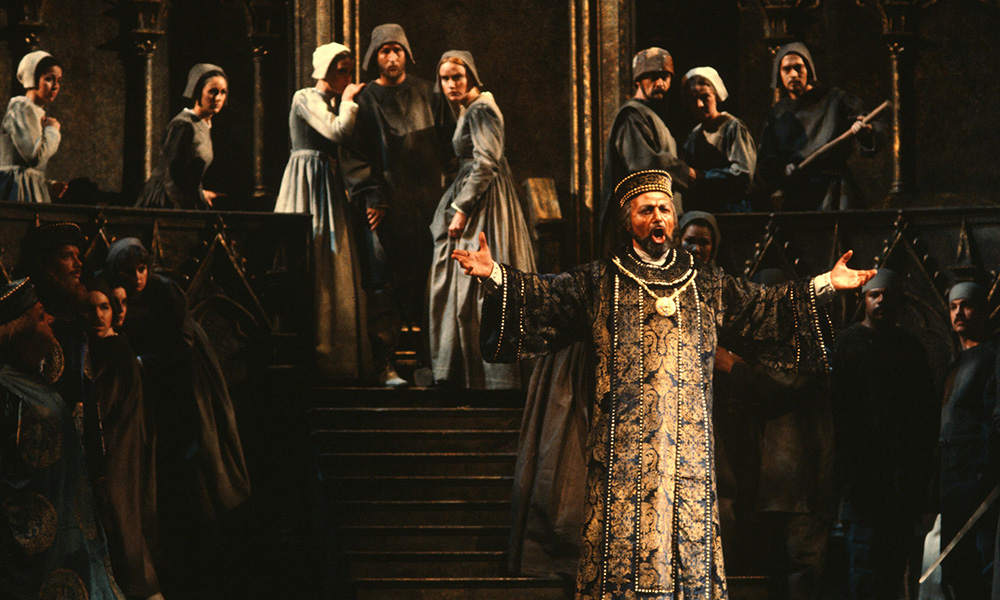
What about the great Verdi baritone roles post-Rigoletto? They give us desperate jealousy (Count di Luna in Il Trovatore), fatherly concern (Germont in La Traviata), and incomparable nobility (title role of Simon Boccanegra). Then there are the Shakespeare-based characters: the despicable villain (Iago in Otello), and, in Falstaff, both the cuckolded husband (Ford) and the faded but still vital seducer (title role). With much glorious music and a profoundly moving characterization, it’s Boccanegra who gets most baritones’ vote as the Verdi role—besides Rigoletto—that they crave an opportunity to perform. Simon isn’t as vocally demanding as Rigoletto, but he needs exceptional, in-depth emotional communication.
If you want to learn more, start with YouTube, where you can hear every great Verdi baritone since the early twentieth century. It’s thrilling to sample their contrasting approaches to these roles, whether it’s Italians (for starters, try Riccardo Stracciari, Ettore Bastianini, Piero Cappuccilli, and Renato Bruson) or Americans (there’s a “royal line” from Lawrence Tibbett, Richard Bonelli, and Leonard Warren to Robert Merrill, Cornell MacNeil, and Sherrill Milnes). In their different ways, they’ll all give a complete view of how these roles sound when the singer is truly in command. And if you really want to read about Verdi baritone roles from someone who’s been there, head to a library or a website selling out-of-print books for The Verdi Baritone: Studies in the Development of Dramatic Character, written by Geoffrey Edwards and his father, the noted Verdi baritone Ryan Edwards.