

Old Love, New Love, Trick Love, True Love
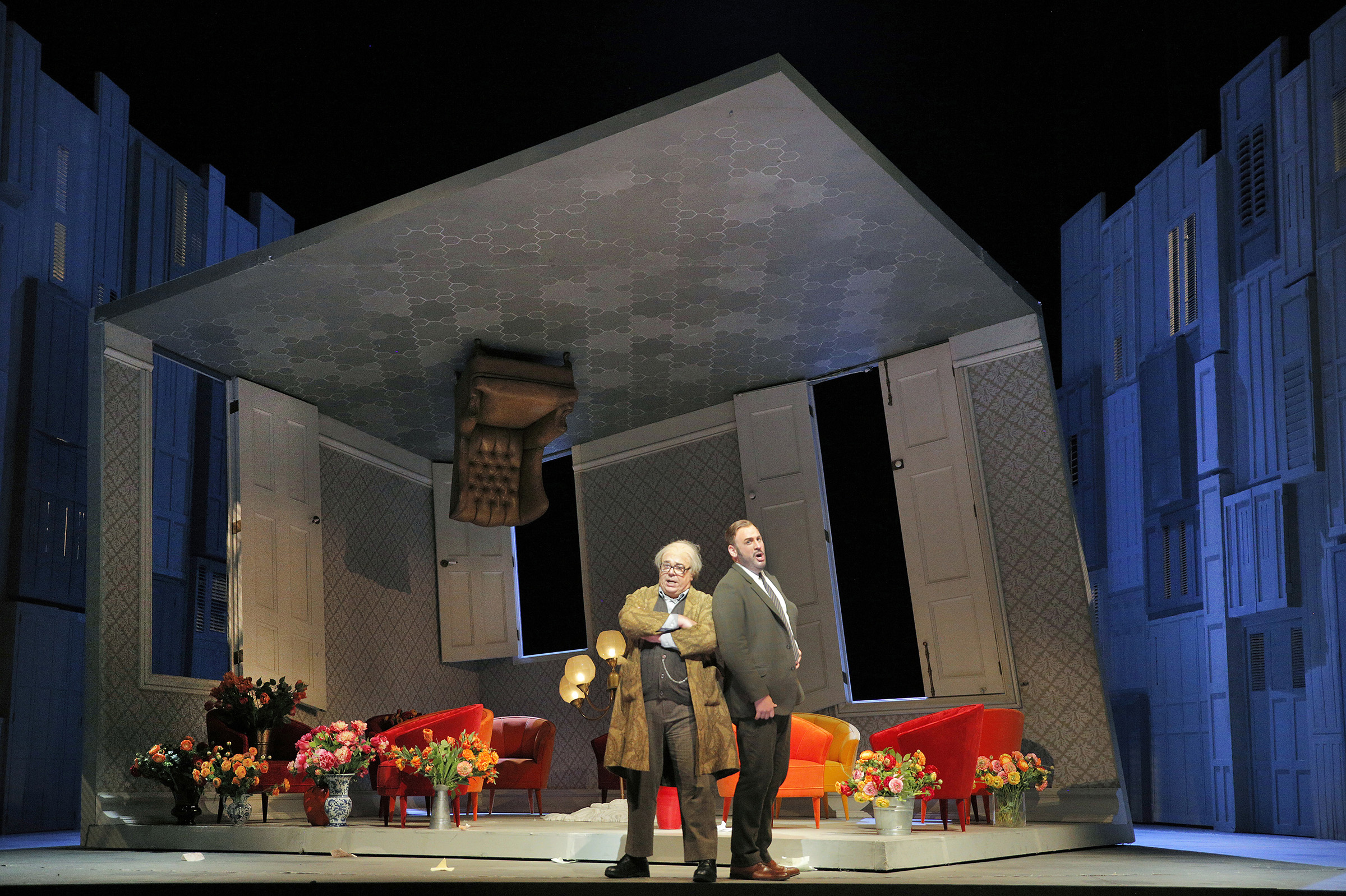
For me, the period shown in Italian movies of the 1950s and ‘60s captures this complexity. They are set in an era that we think of as modern, but they are also visually simplified: the surroundings still show the shortages of World War II, and the films are black and white. That gives them a timeless, univ ersal feeling we have tried to capture on stage in this opera. We can’t tell by looking exactly when it is taking place, but we have all seen homes like Don Pasquale’s. Perhaps it was once luxurious, with the big chandelier and the big upholstered chair he likes to sit in. But now things have gotten a bit shabby. It has not been renovated in a long time, and nothing seems quite right because the scale is off—a little too big here, a little too small there. This puts the action into an odd perspective that makes us think.
The humor in this opera is wonderful, but there is also truth in it—truth that is a little sad. Norina and Ernesto are young and in love. like us, they want it all: marriage and the financial security that only Ernesto’s rich uncle, Don Pasquale, can offer them. How far should we go to get what we want? How far is too far? In the end, they learn the answer. And so do we.