

Wagner's Last Symphony: The Quest for Enlightenment
Listen and Read Along
This article is read by an automated voice
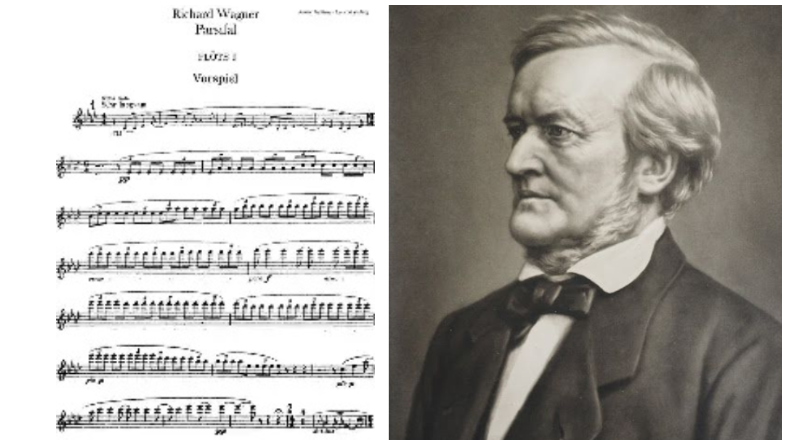
Richard Wagner’s final opera, Parsifal, is very much the work of a man in the twilight of his life. It opened in Bayreuth in 1882, less than a year before Wagner’s death, and nearly everything about it, from its measured pace to its meditative silence, bears the marks of an artist turning away from the turbulence of his past toward questions of mortality, reconciliation, and release. Parsifal can be heard as both Wagner’s Christian mystery play and as his late-life dialogue with the Buddhist ideas that had increasingly preoccupied him.
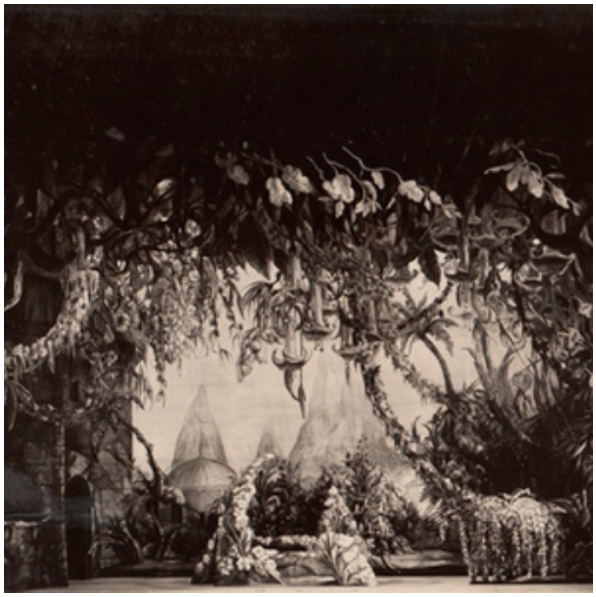 Parsifal (1950) / Set Designer Armando Agnini Eugene Dunkel / Photo: R. Strohmeyer_San Francisco Opera
Wagner’s Late Years
In his last decade, Wagner was a man both triumphant and exhausted. He had finally built his dream theater at Bayreuth, a personal vision come to fruition. But that achievement took a toll on his life. Wagner was plagued by constant illness, and his personal life didn’t fare any better. He provoked quarrels and made decisions that hurt the ones closest to him. His wife Cosima, fiercely protective and brilliant in her own right, found herself managing the volatile temper of Bayreuth’s self-proclaimed king. Wagner, who had once hurled manifestos against Europe and reinvented the opera stage, appeared in the end more vulnerable, quieter, even contemplative.
It is precisely in this climate that his turn toward Eastern philosophy becomes telling. Wagner had always been a voracious reader of metaphysical thought: first Feuerbach, then Schopenhauer, and eventually the Buddhist texts entering German and French intellectual circles in the 1850s and 1860s. French scholar Eugène Burnouf’s Introduction to the History of Indian Buddhism spoke to him deeply, and he toyed for decades with the idea of writing a Buddhist opera, Die Sieger. Though unrealized, the themes of renunciation and compassion from that project ultimately seeped into Parsifal.
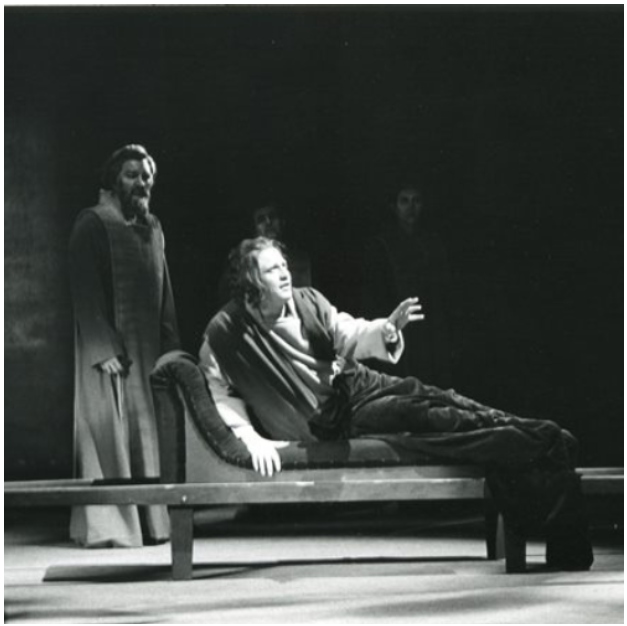 Parsifal (1964) / Giorgio Tozzi (Gurnemanz), Eberhard Waechter (Amfortas) / Stage Designer Wolfram Skalicki / Photo: Pete Peters_San Francisco Opera
Buddhism in Parsifal
Amfortas’s unhealing wound, Parsifal’s awakening through compassion, Kundry’s restless wandering—all of these carry overlays of Buddhist thought. Suffering as the universal condition, knowledge through empathy rather than conquest, salvation through renunciation rather than assertion. These are themes not only consistent with Buddhism but also poignant for a man whose whole career had been defined by conflict, provocation, and desire. Wagner, toward the end, was no longer projecting strength but recognizing fragility.
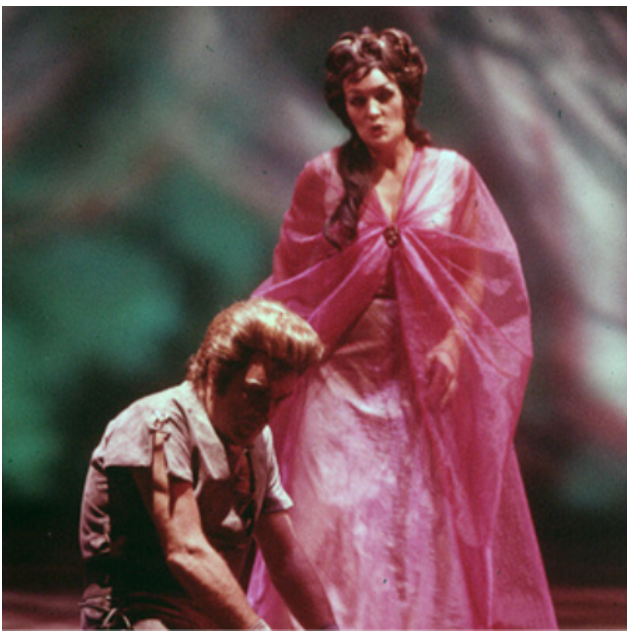 Parsifal (1974) / Jess Thomas (Parsifal), Eva Randova (Kundry) / Designer Wolfram Skalicki / Photo: Carolyn Mason Jones_San Francisco Opera
The Retreat to Silence
Wagner’s insistence that Parsifal be performed only at Bayreuth suggests his desire to consecrate the work as more than theater. It became a kind of ritual space, his personal monastic environment. There is less bombast than in his earlier operas; instead, one hears an atmosphere more akin to meditation. Wagner, famously never at peace, seems to have used his final composition to imagine peace, even if only fleetingly.
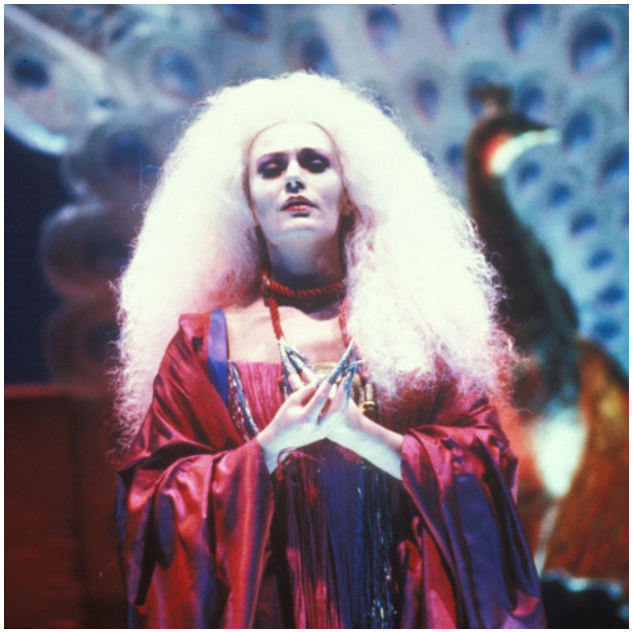 Parsifal (1988-89) / Waltraud Meier (Kundry) / Designer Pet Halmen / Photo: Ron Scherl_San Francisco Opera
Wagner’s Last Chapter
Richard Wagner pushed opera into new territory. He built works around restless harmony and long arcs of tension. His ambition drove him to rethink how myth, philosophy, and sound might speak to each other in a single vast vision. Prior to Parsifal he wrote The Ring cycle.
Wagner’s four-opera cycle is one of the greatest creative accomplishments of humanity. Written over a period of 26 years, The Ring is an epic journey that takes us from the birth of the world to the destruction of the Gods and the heralding of a new world order. Continuing Music Director Eun Sun Kim’s exploration of the works of Wagner, and in Francesca Zambello’s highly acclaimed production, The Ring is an artistic experience like none other. San Francisco Opera looks forward to welcoming you to experience one of three cycles of The Ring in June 2028.
In the closing months of his life, Wagner was writing essays on love, redemption, and gender. The man who had reshaped European opera with fire and storm died quietly in February 1883 after a heart attack. Parsifal feels like his final confession after fighting the world for so long; he’s finally looking for the peace that comes with letting go. Buddhism, with its path of release, offered Wagner a mirror for his own late-life longing. A mirror cracked from a lifetime of controversy and genius.
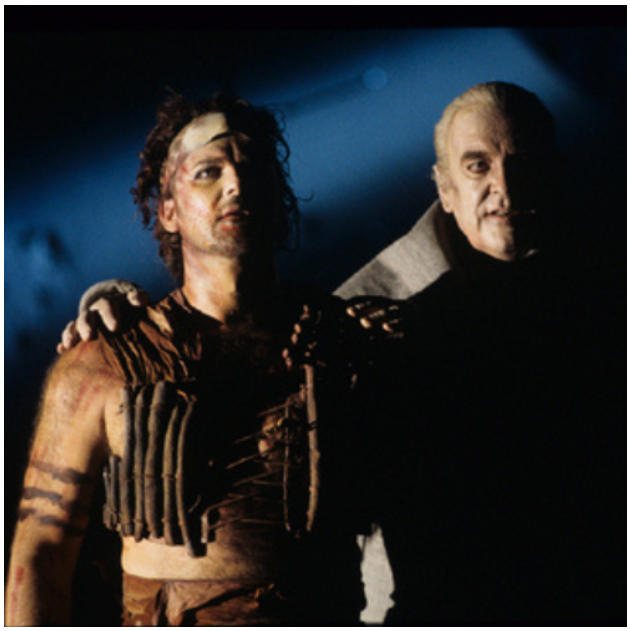 Parsifal (1999-2000) / Christopher Ventris (Parsifal), Kurt Moll (Gurnemanz) / Costume Designer Andrea Schmidt-Futterer / Photo: Ken Friedman_San Francisco Opera