

Backstage with Matthew: Singing the infinite
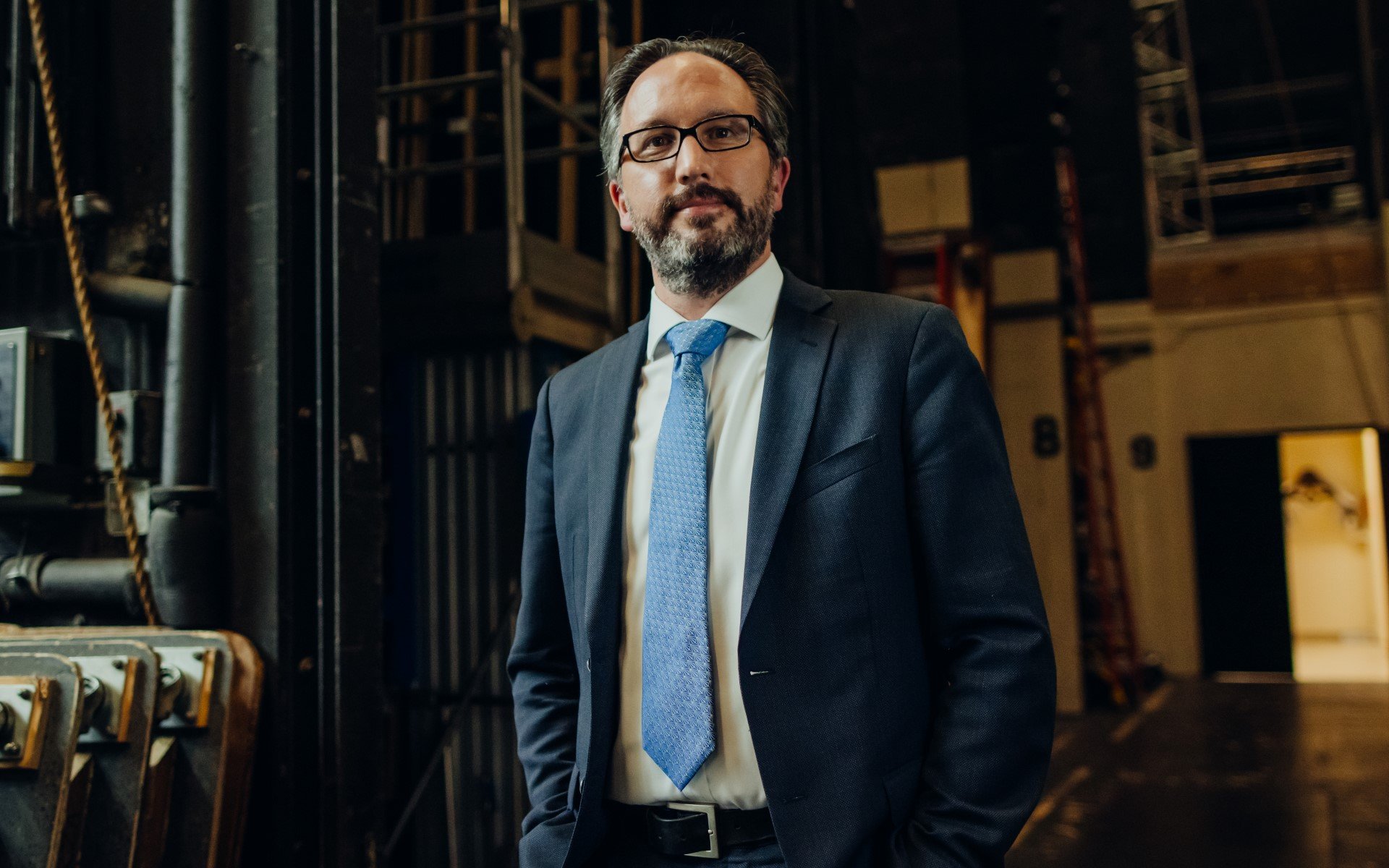
As we have just experienced in these past weeks, Tristan and Isolde is one of the epic accomplishments of human creativity: an almost five-hour journey into the heights and depths of emotion, a stretching out of time such that we begin to glimpse the infinite, and a soaring expression of the pinnacle of Romanticism. Under the baton of our Music Director, Eun Sun Kim, this has been an extraordinary moment for the company. She has taken us on a journey that has opened a portal between the artistic and the spiritual. On stage, this epic story is carried with staggering intensity by the title characters—two of the most demanding roles in all of opera. I sat down with our Isolde, Anja Kampe, and our Tristan, Simon O’Neill—two of the world’s greatest Wagnerians—to get a sense of what it takes to create performances of such towering impact.
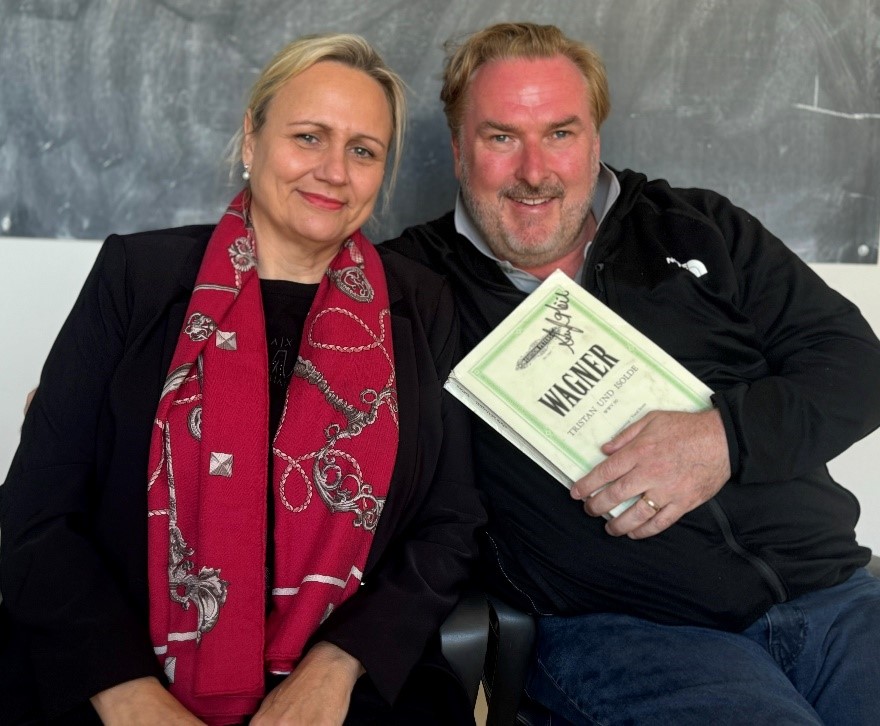 Anja Kampe and Simon O’Neill
For both artists, these roles are unique undertakings. For Anja, the sheer length of the opera means that she has to be particularly attuned to her voice each night. Over a span of this many hours, the voice can morph and change with the vagaries of weather, humidity, time of day, and other factors. You have to be attuned to pacing and energy levels as the performance unfolds to ensure you keep the reserves needed to get through to the end.
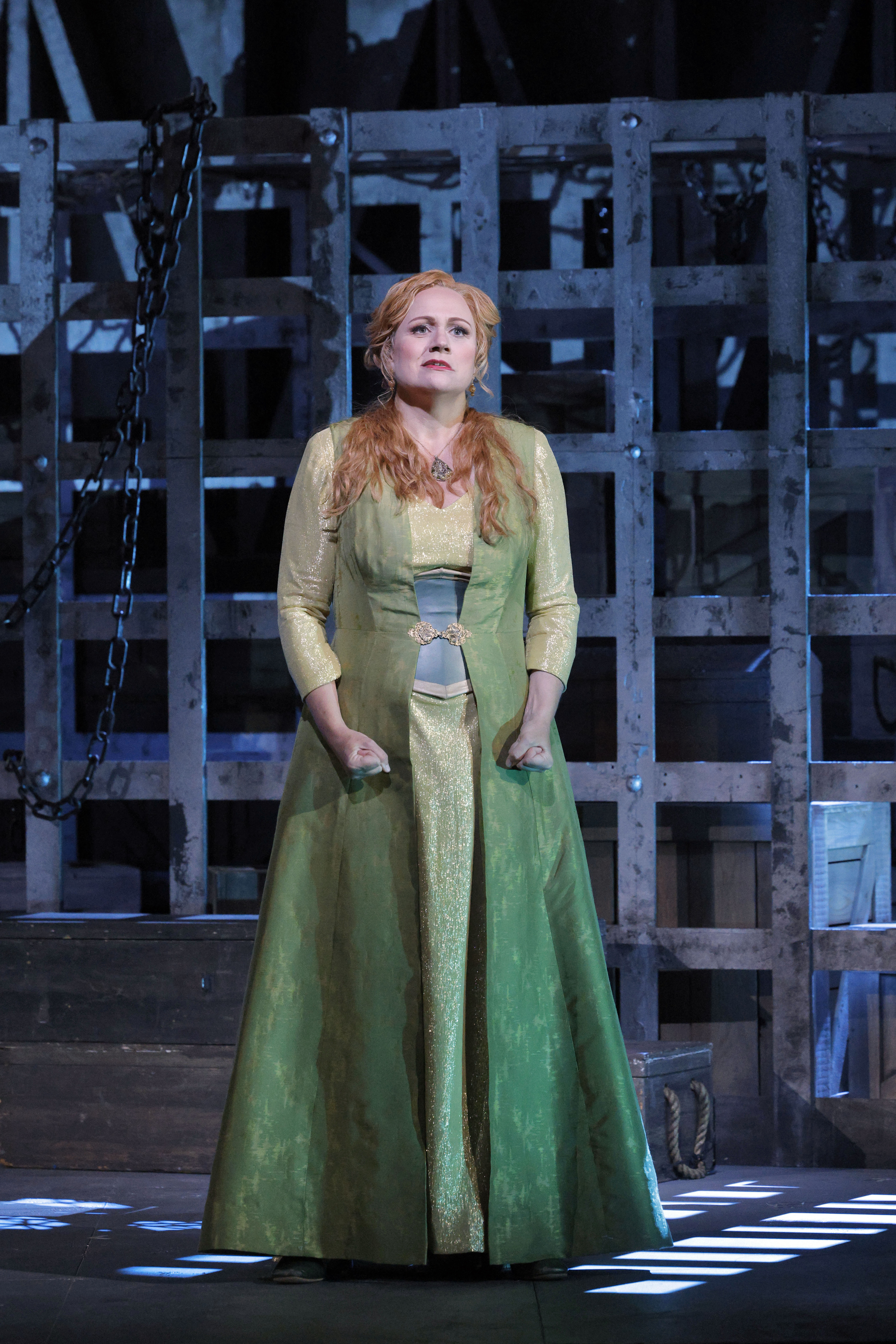 Photo: Cory Weaver
That pacing is quite different for each of the two lead roles. Isolde has big sings in the first two acts, then a big gap in the third act before she comes on for the conclusion and the famous Liebestod. For Tristan, there is less pressure on the first act, but then the second and third acts are major undertakings. That means he has to be so disciplined in the first act, not giving too much up front and keeping huge amounts of reserves for later.
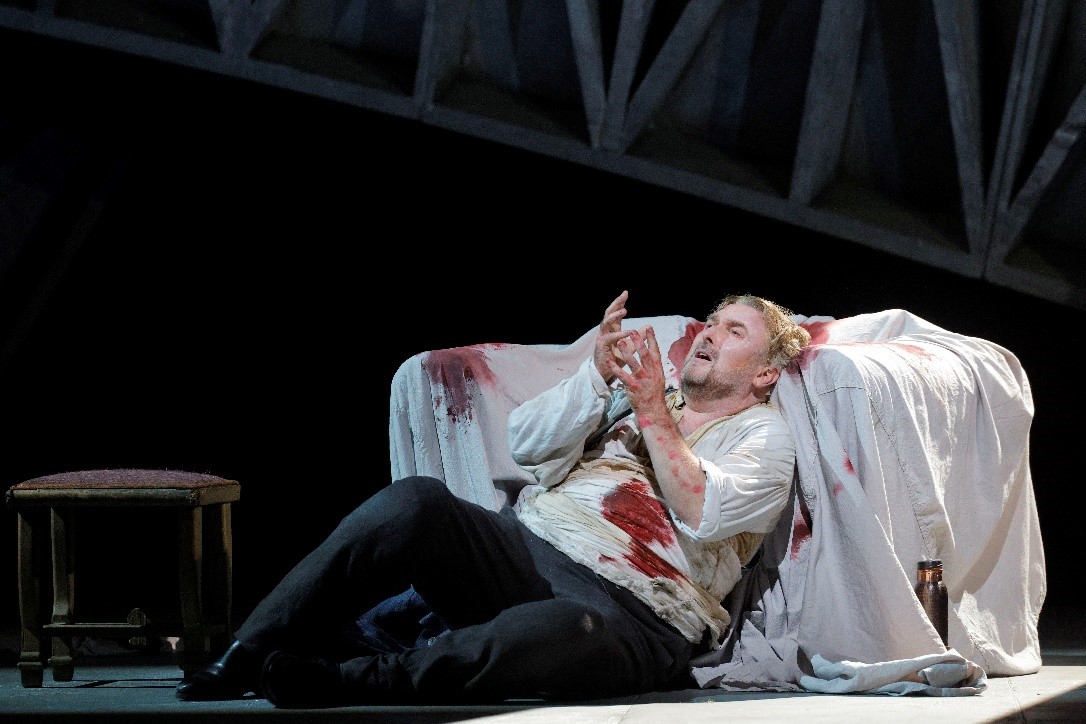 Photo: Cory Weaver
Tristan is an endurance test for any singer, and the precious downtimes of intermissions are essential. We had 30-minute and 25-minute intermissions here in San Francisco. For Simon that 25 minutes was a little tight before his big Act III monologue, but it meant that he didn’t need to warm up his voice again—he could really focus on getting physical rest. Anja has to warm up her voice again before her Act III entrance given the almost 90-minute gap; but for her, the intermission between Acts I and II is critical given the huge demands of the back-to-back acts.
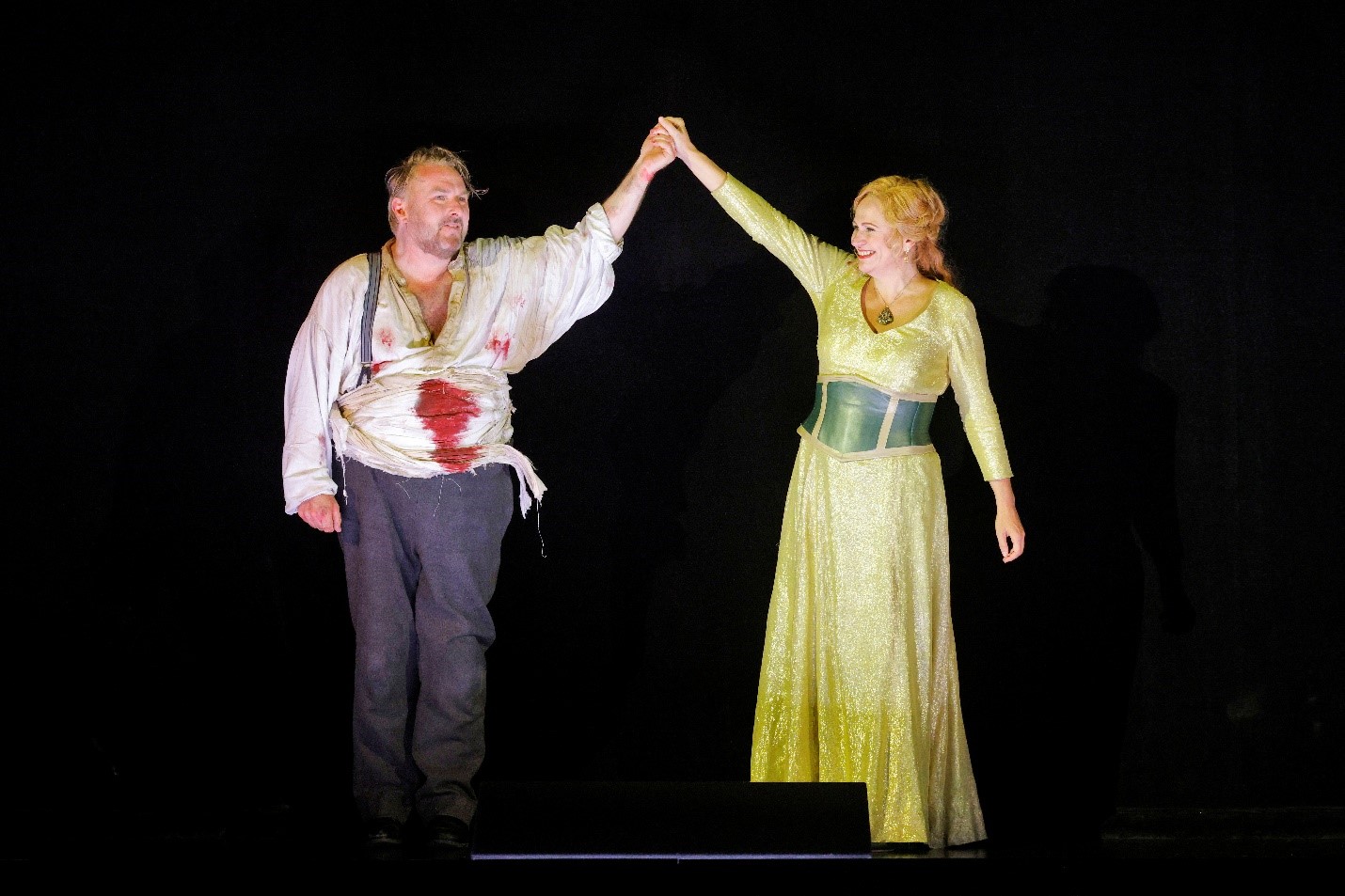 Anja and Simon receiving the rapturous applause of the house at the conclusion of Tristan
These kinds of extreme demands are a key reason why singers wait before taking on these roles. Singing Isolde or Tristan requires the experience of other Wagnerian roles, of knowing exactly how far you can push your instrument, and of being able to channel exactly the right amount of emotional intensity without it overtaking you.
A big question for singers is how much they let themselves into that emotional intensity. Anja says it is important to let go at times with abandon—you don’t have to be in complete control the whole time, but you must be able to always bring it back into control if you’re to make it to the end.
Simon talks about this balance of emotion and control both in regard to the piece and more globally. In terms of the opera, he reflects that, on the opening night of Tristan “I might have enjoyed myself a little too much in the second act!” and so he had to be incredibly disciplined in the third to preserve his vocal energy. In terms of the global arc for a singing career, he says if you push too much as a young tenor, you will have a passionate but short career. You must lead with a technique that allows you to keep control of the passion. He likens it to tennis and the extraordinary discipline that a player like Roger Federer exhibits. Simon talks about so much of the focus being in what happens before the note comes out or the tennis ball is hit. It’s the immediate preparation for those moments where discipline is most importantly felt.
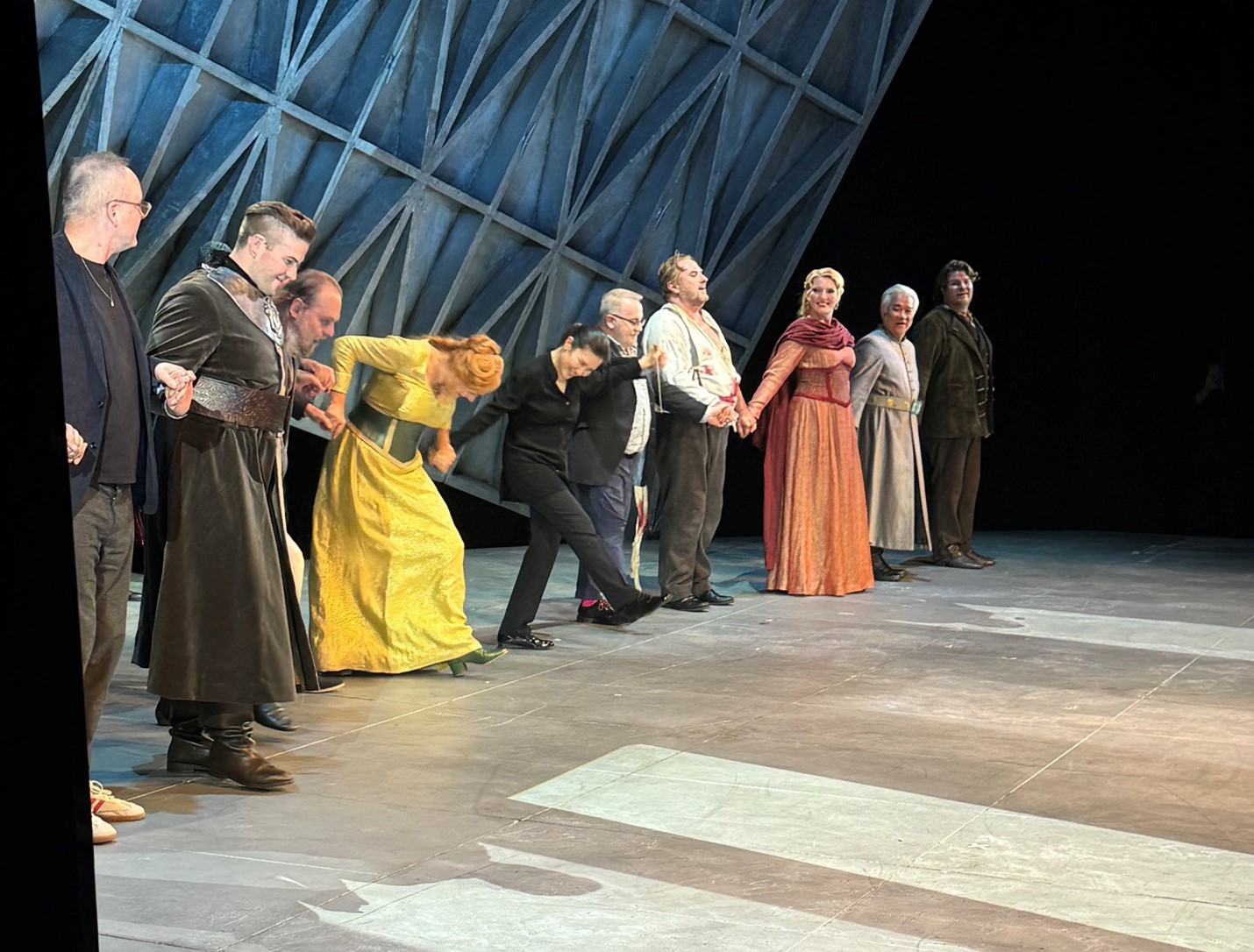 The curtain call at the opening night of Tristan and Isolde
Anja undertook her first Isolde at Glyndebourne in 2009 which she said was a perfect environment in which to acclimate to the role: 8 weeks of rehearsal with a strong conductor, and in the bucolic setting of rural England replete with fields of sheep. Anja talks of the importance of working with a repetiteur in taking on these works—a pianist you trust who you can shut yourself away in a room with for hours and who can help you solve technical solutions as you develop your own interpretation of the opera. She credits pianist Jendrik Springer at the Vienna State Opera for his work with her, along with the incredible conductors with whom she has undertaken the role, including Vladimir Jurowski, Kirill Petrenko, Daniel Barenboim, Philippe Jordan and Eun Sun Kim.
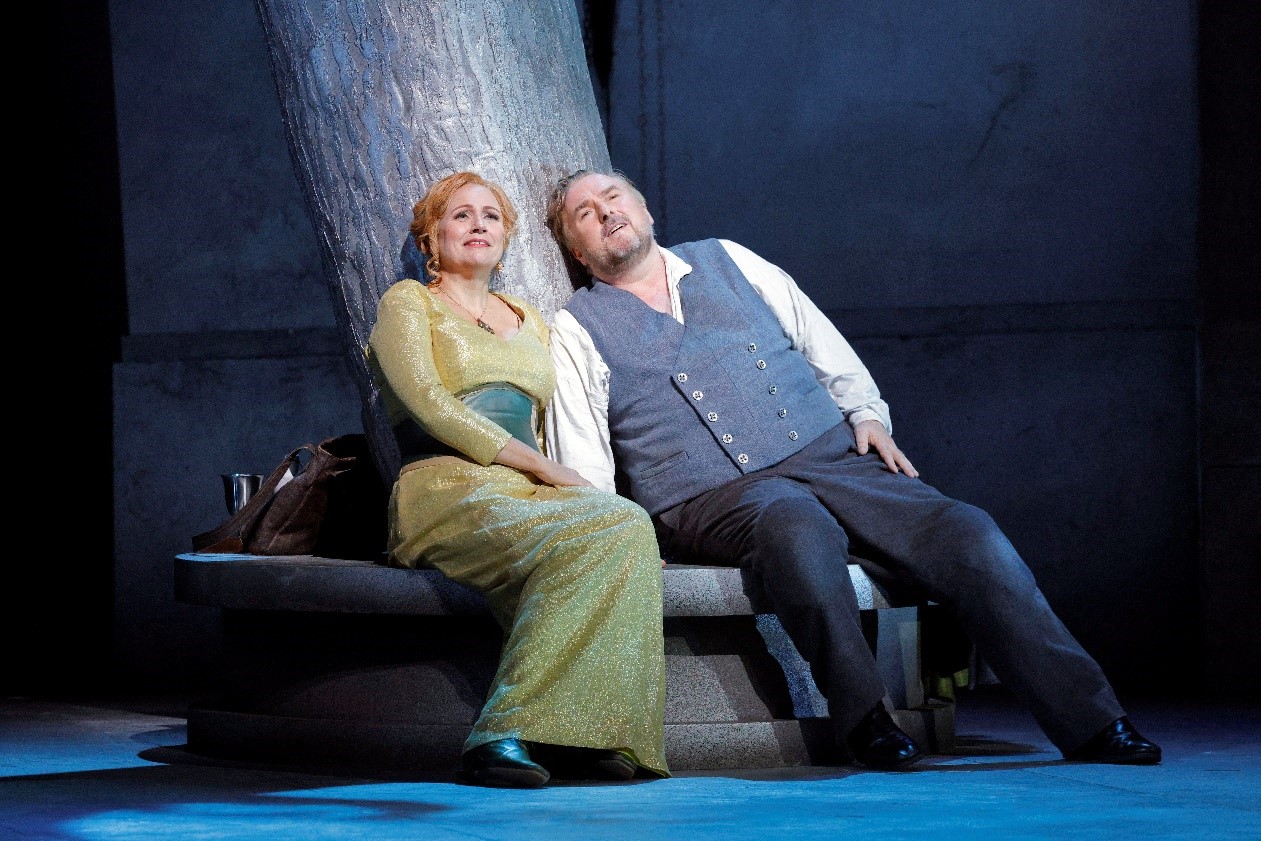 Photo: Cory Weaver
Simon talks of how important it is to surround yourself with people you trust when you take on roles like Tristan. After being in Merola (2002) and being encouraged to look at Germanic repertoire, he contacted fellow New Zealander, celebrated bass-baritone Sir Donald McIntyre. McIntyre took Simon under his wing and surrounded him with his UK ‘team’ of musical conductors, coaches and pianists—people like David Cyrus and Lionel Friend—who guided him on his Wagner journey. Simon and Eun Sun Kim were also able to spend time working together on the role in earlier this year which was invaluable in building their shared musical vocabulary for the role.
As you’ll know if you attended a Tristan performance, the libretto of the opera can often tend towards the philosophical. It is the most concentrated expression of Wagner’s fascination with the German philosopher Arthur Schopenhauer, whose work he had discovered in the midst of composing his Ring Cycle. In fact, after discovering Schopenhauer, Wagner took a twelve-year hiatus after writing Rheingold and Walküre, during which time he wrote Tristan and Meistersinger. You then see the influence of Schopenhauer coming through in the last two operas of the Ring.
To that end, the dense text of Tristan is not easily assimilated for a singer. Even for a native German speaker, Anja talks about the challenge of the text. She says that you want to be able to deliver it in a way that adds meaning, but it can be almost impossible to do that when Wagner’s philosophical lines are so long that, after many sub clauses, it’s hard to remember where the sentence began! Interestingly, when Anja was learning the role, she used an Italian translation when she wasn’t able to completely understand the meaning in her native German – made even more complex because Wagner would sometimes make up his own words!.
For Simon, the text in Tristan is also something to conquer. Fascinatingly, he uses muscle memory around the physicality of how one makes these extraordinary clusters of German consonants—getting ones tongues and lips around the hard edges of the language, and remembering the physicality of that when singing. The memory of these is how he finds his way through the long phrases.
Simon’s score of Tristan is a treasure trove of goodies. In addition to translations, he marks in his score instructions to himself about physical needs (e.g. “time to swallow”), emotion, reactions, etc. And there are some fabulous handwritten notes that convey the style he wants for a particular phrase. At one point in his score, he reminds himself to “Be Tosca!” in an expression of dramatic immediacy. At another particularly ‘crooning’ moment of the huge love duet in Act II, he marks the score “Sinatra”.
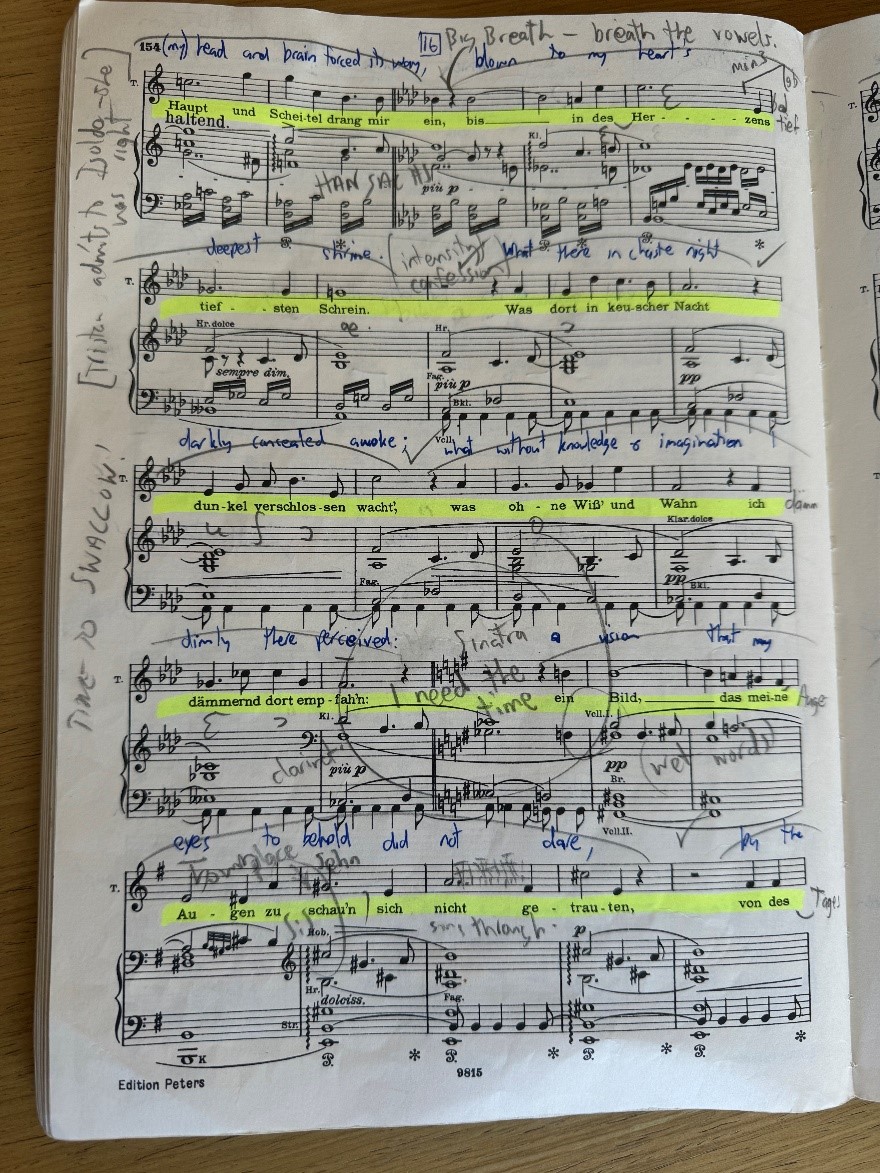 Simon’s score for part of Act II of Tristan; the Sinatra reference is in the middle of the page.
After more than four and a half hours of such intense music making, the opera comes to a close in very different ways for our two singers. For Anja, it is one of the most glorious moments in the entire repertoire—the Liebestod “Mild und Leise” —the soaring apotheosis of the human voice and something one builds one’s whole career towards. For Simon, he is lying dead on the ground at Isolde’s feet in what he notes is “the best seat in the house” for the Liebestod, thinking about the extraordinary legacy of the piece that he and Anja are carrying forward in this house.
It is a moment of incredible satisfaction, for them, and for us.
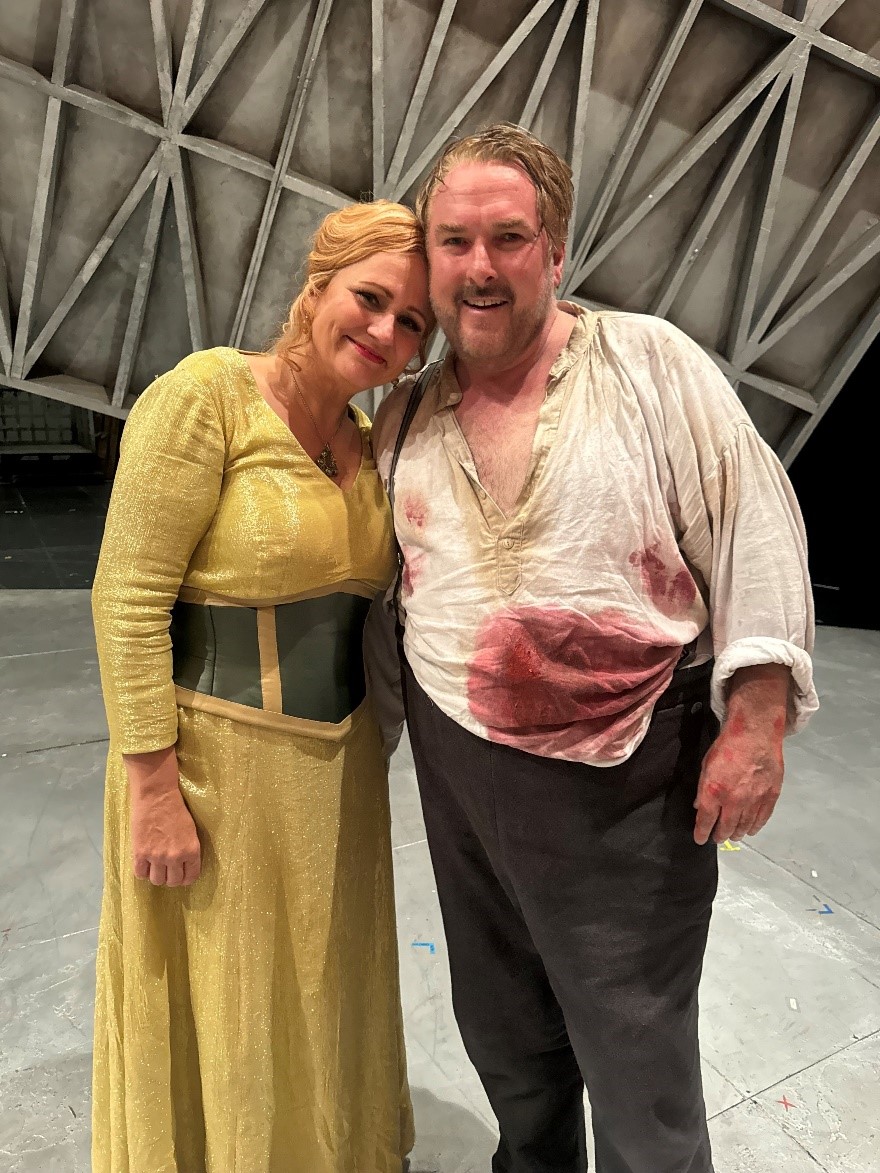 Anja and Simon at the conclusion of the fourth performance of Tristan and Isolde