

Discussing Cleopatra’s Infinite Variety With Dramaturg Lucia Scheckner
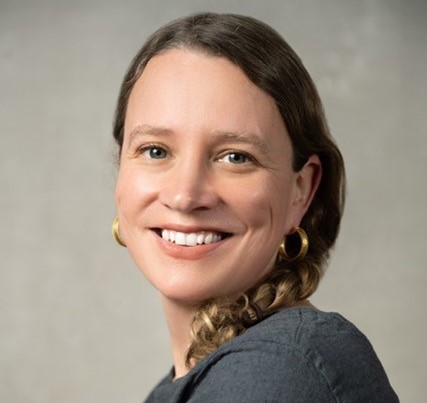
“We met basically in the midst of what we thought was this absurdity of wearing masks. Little did we know,” Scheckner laughs. The creation of the new opera has since spanned the duration of the coronavirus pandemic—and the widespread use of face masks as a safety measure.
Now, Scheckner, Adams, and the team are preparing to unveil the finished product, a world premiere that will inaugurate San Francisco Opera’s 100th season this September. But for Scheckner, her journey to this point stretches back decades, to a childhood spent enamored with theater.
“I was a real city kid, and city kids grow up fast,” Scheckner says of her childhood in New York City. The daughter of two academics, Scheckner had always had an interest in theater and performance. But stepping on stage herself? Not so much.
“I love performers, but I would die before I'd be on stage with everyone looking at me,” she says cheekily.
But her grandparents had exposed her to the works of playwright Bertolt Brecht and other theater practitioners who used their pens to raise awareness of social issues. Those early influences would provide Scheckner with a path she too could follow.
As a teenager with dyed purple hair and a nose ring “at the ripe age of 15,” Scheckner started to write her own plays, drawing inspiration from the Beat poets and Theater of the Absurd. One of her first plays, called Hallways, took a Breakfast Club-like set-up—teenagers from different walks of life, all stuck in the same place—and whipped it into absurdist heights.
“I grew up in an atheist household, and I definitely think that theater performance spaces very quickly became these beautiful sort of spaces—and I would not be the first or the last person to say this—like a different kind of church,” Scheckner says.
When she finally reached senior year of high school, Scheckner was paired with the chair of Columbia University’s theater department as her mentor for her capstone project.
That guidance pushed her to explore theater experiences beyond Broadway and well-established institutions—to the “strange nooks” of artistry that cropped up around the city. She even got to interview Tony nominee Tina Howe, an Absurdist New York City playwright.
Scheckner started to understand herself as part of a theatrical lineage. Simply sitting in the audience helped her feel more connected to the world around her.
“Even though you are laughing at this one moment, because of something unique to your experience, all these people around you are laughing too,” she explains. “And suddenly you feel collectivized and connected in a really special way, you know? I think that's one of the things that's so magical about the live performance experience in general.”
It was through that high-school mentorship that Scheckner first became exposed to dramaturgy as a discipline. She collaborated with her mentor as dramaturg on a production of Brecht’s play Caucasian Chalk Circle.
But defining precisely what dramaturgy makes Scheckner laugh. She says her father is still scratching his head, wondering what she does.
“No two people give you the same definition,” she explains, pointing to the profession's divergent spellings: dramaturg and dramaturge. “Even the way you spell the role: Is there an E or no E? There's a lack of clarity and consensus about that in the States.”
Scheckner describes dramaturgy as being a “process doula,” helping big ideas to be born onto the stage. Her path into the profession started with studying literature and philosophy at Union College in Schenectady, before pursuing a theater studies master’s at Columbia University.
Along the way, Scheckner discovered just how diverse the field of dramaturgy can be. In countries like Germany, she says, government funding helped institutionalize the role as a cornerstone of the theater. But in the U.S., she saw dramaturgy take on different guises.
“It often manifests as a literary manager, or someone who goes into scholarship, or someone who is in academia. Or you go into being an expert in Shakespeare and you do a lot of research. Or you're particularly interested in reimagining classics for the contemporary stage,” she says, ticking off all the options.
“There are just so many different ways that work materializes. And I certainly didn't appreciate what a spectrum that would be.”
Scheckner started to collaborate with director Elkhanah Pulitzer as early as their graduate-school days, and their professional relationship continues into the present day. Antony and Cleopatra is their fifth project together, Scheckner says.
It all started in 2017, when Scheckner provided research for Pulitzer’s production of Nixon in China, a John Adams opera being performed at the Los Angeles Philharmonic in honor of the composer’s 70th birthday.
“Soon thereafter,” she explains, “Elkhanah and John were talking about their experience collaborating on that project. And he mentioned having always wanted to do an opera of Antony and Cleopatra.”
But the Shakespeare play was a massive oeuvre, with 42 scenes spread across Egypt, Rome, and the Middle East. Pulitzer suggested a dramaturg be brought on board to help wrestle down the source material into something manageable. That’s how Scheckner joined the team.
In their early meetings in California, the three artists used industrial-sized scrolls of paper to try to map the Shakespearean plot. “We literally cut and paste—like, physically cut and paste—the play” onto the sheets, Scheckner says.
Scheckner had just had her second child, and between pumping breaks, she, Pulitzer, and Adams bonded over stories of parenthood. It sparked conversations about their heroine Cleopatra—looking beyond her legacy as femme fatale and understanding her both as a mother and leader.
“Over the years, we have shared photographs of our families,” Scheckner says of Adams. “We would pepper our work with conversations about great art and something we're reading and our dogs and his grandkids and my kids.”
Now, as Antony and Cleopatra hits the stage, Scheckner reveals some of the insight she’s gained on Egypt’s most famous female pharaoh—and why audiences should question the version of Cleopatra often served in pop culture.
This interview has been edited for length and clarity.
SAN FRANCISCO OPERA: What were some of the most effective ways of disrupting the Western-centric lens that you came across? Because it is so common to see Cleopatra just as this over-sexualized, overheated figure.
LUCIA SCHECKNER: I think one thing that's interesting is the way that Shakespeare is, in his own writing, very conscientious that all the world is a stage. And here we would have a boy actor playing Cleopatra. [In Shakespeare’s time, young men performed the female roles.] So there are just these layers of artifice baked in.
And so when any production, wherever produced, leans into that more, to give an opening for the audience to understand that this is a human being who might be very intentionally playing with her power—playing with being a femme fatale but who is not at her core a two-dimensional sex kitten—it exposes an opportunity for the audience to connect with this person who's in a very vulnerable place. Any of those representations are really exciting to me.
And remember that she's a mother, and that her children's future and their survival in all of this is paramount. Not only because these are her children, but literally her legacy is bound in their survival too. So I think, when there are occasions to see that vulnerability and sensitivity as a mother, that is also very humanizing.
SAN FRANCISCO OPERA: In her own upbringing, aren't the rumors of her killing her own siblings? I'm not sure how much credence to give that, but it was a pretty dangerous time to be a ruler.
LUCIA SCHECKNER: Absolutely. And that was common practice, that you had your own camp and that you don't know who you can trust. But her children being her legacy and how an audience would react to that goes way beyond these representations where we see her as this quote-unquote othered, Eastern, fetishized, sexualized caricature.
If you start to understand the source material that Shakespeare is drawing from—mainly Plutarch and Horace—these were folks who were actually sponsored by Caesar Augustus. That’s Octavian, who would become Caesar Augustus, the first ruler of the [Roman] empire, who had a lot of good reason to want to portray her in a very particular way.
The old trope is that history is written by the victors, and then this is the template of the story that gets passed down through the ages.
If there were any more original Arab sources, they were very likely burned in the fires of the great Alexandria library, where all of the scrolls were of her time. So we have very limited direct source material from the Arab world.
So just knowing how that's been passed down through generations and through the Western gaze, as Edward Said would say, where are our openings to see her as a real person?
SAN FRANCISCO OPERA: Given that we have very limited source material about her—except from, as you mentioned, the victors, the Romans—why has the myth of Cleopatra endured so long?
SCHECKNER: This is a tangent that's relevant. I worked on After the Fall, which is an Arthur Miller play. And by all accounts, it reflects his relationship with Marilyn Monroe and then his later wife Inge Morath.
I went into it, like, “Why does everyone care about Marilyn Monroe so much? I don't really get it.” And then, the more I dug into it, I was like, “Wow, this is just a totally extraordinary person.”
In the context of Cleopatra, she is born into these incredibly complicated circumstances. She's made a ruler at 18 when her father dies. She has to marry her brother who is 10. She is very quick to position herself as the primary ruler. She learns, among the many languages that she knows, Egyptian.
And she's the first of the entire Ptolemaic dynasty to do that because Egyptian was a really complicated language, and Greek was much more accessible and shared. And then she finds a way to build an alliance with Julius Caesar who's 30-plus years older than she is.
So I think all those qualities makes her this extremely exciting—or, as Shakespeare says, her infinite variety is really fascinating. And then lastly that she takes her fate into her own hands and refuses to concede to Caesar.
So it's the lore of how she just constantly controlled her own fate and authored her own fate at a time when that would've been very difficult to do.
SAN FRANCISCO OPERA: How do you see the propaganda, the imagery of Cleopatra's time echoing into the present day? What has been the impact of Cleopatra's image in the world, on our Western mindset?
SCHECKNER: Going back to the Marilyn Monroe for just a second: You had Marilyn Monroe, and you had Norma Jeane. Part of what I was getting at is that there's clearly a real person behind this facade, and yet the facade endlessly consumes our imagination.
Even more recently, there was the billion-dollar advertisement for Caesar's Palace. I have a note of it somewhere. Caesar’s Palace featured the comedian J.B. Smoove and Halle Berry as Cleopatra and Caesar, and this was a multibillion-dollar Super Bowl ad that you would see everywhere.
I don't know if you saw it where you are. But it made my mouth drop because I was like, “Wow, it's still just commanding this presence. And it's still so superficial. They have their gold-leaf crowns, and she has the cat-eye makeup.”
I do think there's something kitsch about it at this point. There's something about the fact that we've seen this representation and this icon over time and that it’s just familiar.
I also think probably there are still some really prejudiced and maybe ignorant ideas at the root of this, like, “Oh, let's represent the East this way, or let's represent exoticism this way,” without a ton of consideration of: What does it mean to continue to present this very Western gaze of Eastern peoples and experiences?
SAN FRANCISCO OPERA: The issue of white supremacy crossed my mind when you were talking. We’re still making reference to those images of the ancient world, with white supremacists using them to buttress their ideals—if you can call them ideals.
SCHECKNER: Yeah. Exactly And white supremacy and anti-blackness has a very specific dynamic. I understand that, in Egypt, there have been cigarette boxes that have her iconic eye and that there have been things that are nefarious that have been associated with her. The allure of seeing her as a seductress and so on sells. But it is reductive and limited.
What are those iconic sexualized images that sell and that people like to consume? And maybe unconsciously, they keep a certain order of supremacy and Western dominance, which I find very striking. This is literally rooted in Augustus’s propaganda, which signals the beginning of the Roman empire, which is in many ways an embryonic model of the Western world as we now know it.
And it takes a great deal of conscious, intentional work to decolonize our education and our understanding of those power dynamics and of those stories. In my research, I came across an Egyptian playwright, who did write a play about Cleopatra.
Rather than seeing her as a mistress or this sort of gypsy, she's really presented as a powerful threat to Rome, and that signals what a disfigured representation Cleopatra, this great queen of Egypt, has had throughout Western literature. But we don't hear those stories. And they are few and far between in terms of representation.
See Lucia Scheckner's work in Antony and Cleopatra, opening in its world premiere on September 10, 2022.