
San Francisco Opera History
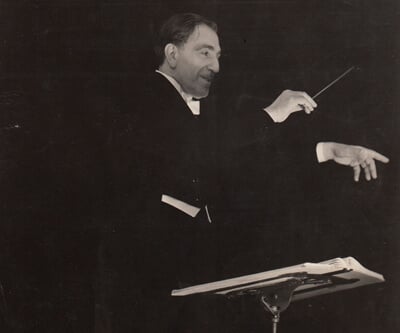
San Francisco Opera was established in 1923 by Neapolitan conductor Gaetano Merola (1879–1953). Beginning with his first visit to the city in 1905, Merola believed the money San Franciscans paid to see touring opera companies could easily support a resident opera company. He also knew of plans for a grand hall for music and opera, which would eventually become the War Memorial Opera House and thought it should be inaugurated by a local group. Upon moving to San Francisco in 1921, Merola began building relationships within the city’s Italian community and secured funding from its business and philanthropic leaders to produce a season of three operas at the Stanford Stadium in 1922. The San Francisco Opera Association was born shortly thereafter.
From its first performance—Puccini’s La Bohème on September 26, 1923 at the Exposition Auditorium (now the Bill Graham Civic Auditorium)—the new company reflected Merola’s bedrock belief that presenting great opera requires great singers. Claudia Muzio, Maria Jertiza, Lily Pons, Ezio Pinza, Giuseppe De Luca, Giovanni Martinelli, Tito Schipa, and Beniamino Gigli were among the glittering names heading the early seasons. Until the 1960s, San Francisco Opera performed on tour from Seattle to San Diego, including an annual residency in Los Angeles, paving the way for future permanent companies around California, Oregon, and Washington.
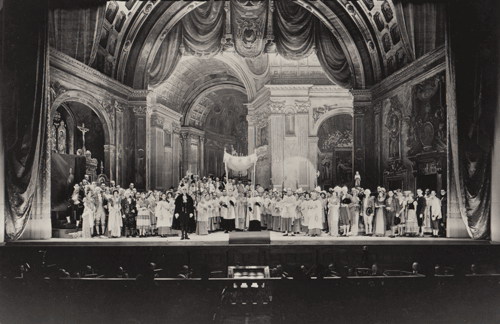
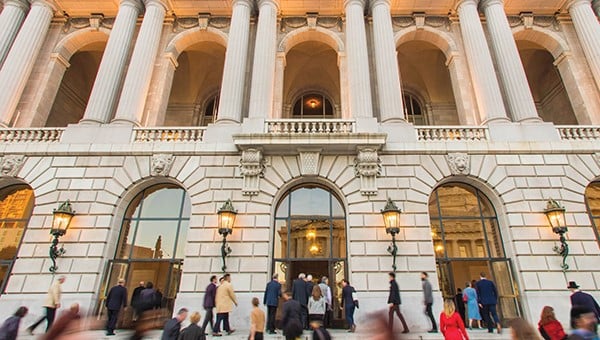
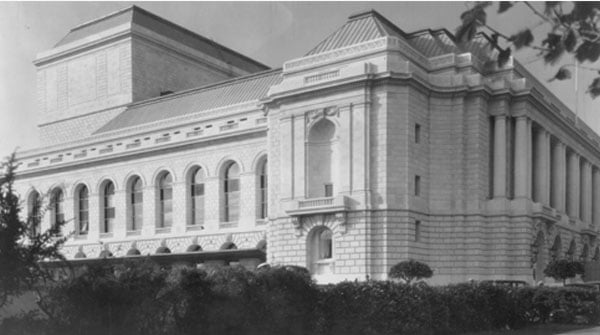
The War Memorial Opera House, built during the Great Depression as a memorial to San Franciscans who served in World War I, became the Company’s new home in 1932. Merola inaugurated the Opera House on October 15, 1932 with a performance of Puccini’s Tosca starring Muzio in the title role that was heard nationally through a syndicated radio broadcast. The Company grew larger and more ambitious, opening its 1935 Season with Wagner’s four-part cycle, Der Ring des Nibelungen, starring Kirsten Flagstad, Lauritz Melchior, and Friedrich Schorr. After a little more than a decade, Merola’s dream for a resident company in San Francisco had blossomed into one of America’s leaders in the field of opera.
While conducting a pre-season concert at Stern Grove in 1953, just as the soprano performing “Un bel dì” from Puccini’s Madama Butterfly sang the word “morire” (to die), Merola suffered a fatal heart attack—he died conducting the music he loved. The man who rushed to Merola’s side was Kurt Herbert Adler. Merola had invited the Viennese conductor to join San Francisco Opera as chorus director in 1943. Adler was quickly named San Francisco Opera’s artistic director and was appointed general director in 1957.
With Adler at the helm, San Francisco Opera’s repertory expanded with bold new productions from directors like Jean-Pierre Ponnelle, known for his ability to balance tradition with vanguard innovation. The Company became known for introducing spectacular vocal artists, including the U.S. debuts of Leontyne Price, Elisabeth Schwarzkopf, Birgit Nilsson, and Mario Del Monaco, and the American premieres of 20th- century masterworks like Poulenc’s Dialogues of the Carmelites and Strauss’ Die Frau ohne Schatten.
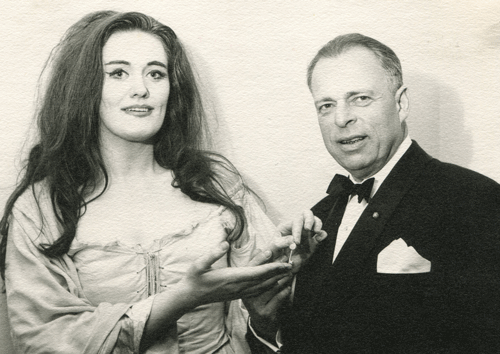 In 1957 Adler founded the Merola Opera Program, a training program for young artists that was the first of its kind in America. In keeping with its namesake’s mission to cultivate new talent, the Merola Opera Program has fostered the careers of a number of today’s superstars, including Deborah Voigt, Ailyn Pérez, Nadine Sierra, Susan Graham, Joyce DiDonato, Brian Jagde, Pene Pati, Thomas Hampson, Quinn Kelsey, and Patrick Summers. The program evolved with the creation of the San Francisco Opera Center (est. 1982) and the Adler Fellowship Program (est. 1982) for the further professional development of young singers, pianists, and stage directors.
In his 28 years leading San Francisco Opera, Adler created a space where the world’s great singers, conductors, directors, and designers could flourish. After his administration, each of the Company’s subsequent leaders possessed unique talents that have ensured San Francisco Opera remains at the forefront of the opera world: Terence McEwen, with his commitment to outstanding vocal artistry and developing young talent; Lotfi Mansouri, who expanded the Company’s repertory and oversaw the restoration of the Opera House in 1996; Pamela Rosenberg’s ambitious programming of notable U.S. debuts and world premieres; and David Gockley’s dedication to building new audiences and an American opera canon.
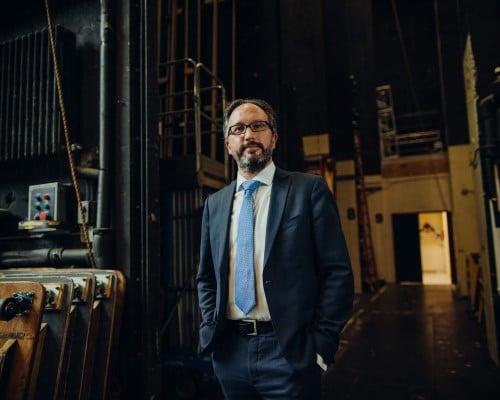 Matthew Shilvock began his tenure as general director on August 1, 2016 and has led the Company through its Centennial Season in 2022–23 and on into San Francisco Opera’s second century. Inspiring community trust and pride in the Company, Shilvock has worked to replenish and expand the repertoire through new productions and commissioning or co-commissioning new works by composers John Adams, Gabriela Lena Frank, Mason Bates, Rhiannon Giddens, Kaija Saariaho, and Huang Ruo.
Throughout its first six decades San Francisco Opera did not have a music director as its first two general directors, Merola and Adler, regularly conducted performances. In 1985 Sir John Pritchard became San Francisco Opera’s first music director, and he was followed by Donald Runnicles from 1992 to 2008. Italian conductor Nicola Luisotti succeeded Runnicles as music director from 2009 to 2018. After her unforgettable Company debut conducting Dvořák’s Rusalka in 2019, Eun Sun Kim was announced as San Francisco Opera’s fourth music director. Beginning in 2021, Kim’s leadership has brought the Company and audiences on artistic journeys through a wide spectrum of works, including an emphasis on major works by Verdi and Wagner every season. Kim is scheduled to conduct her first cycles of Wagner’s Ring in 2028.
Merola’s enthusiasm for emerging technologies ensured that San Francisco Opera was on the air when radio was still in its infancy during the early 1920s. The Company’s ongoing engagement with technology has led to many important and popular media initiatives, from simulcast performances during the 1930s to the first live opera performance to be telecast internationally in 1979. What is now known as the Taube Media Suite, the first permanent HD video production studio installed in an American opera house, was established during David Gockley’s tenure (2006–2016) to facilitate state-of-the-art events, including Opera at the Ballpark simulcasts to the home of the San Francisco Giants, and, since 2022, livestreams of each mainstage opera.
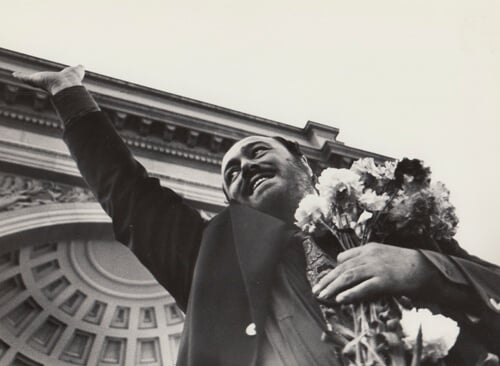 Legendary tenor Luciano Pavarotti, who made his Company debut in 1967 and sang many of his roles for the first time on the War Memorial Opera House stage, once said of San Francisco, “This is my second hometown. Musically, it is my first.” San Francisco Opera stands proudly among today’s leading opera companies, sustained by an audience that is as loyal, diverse, and artistically curious as any in the world.