

Anatomy of an Opera
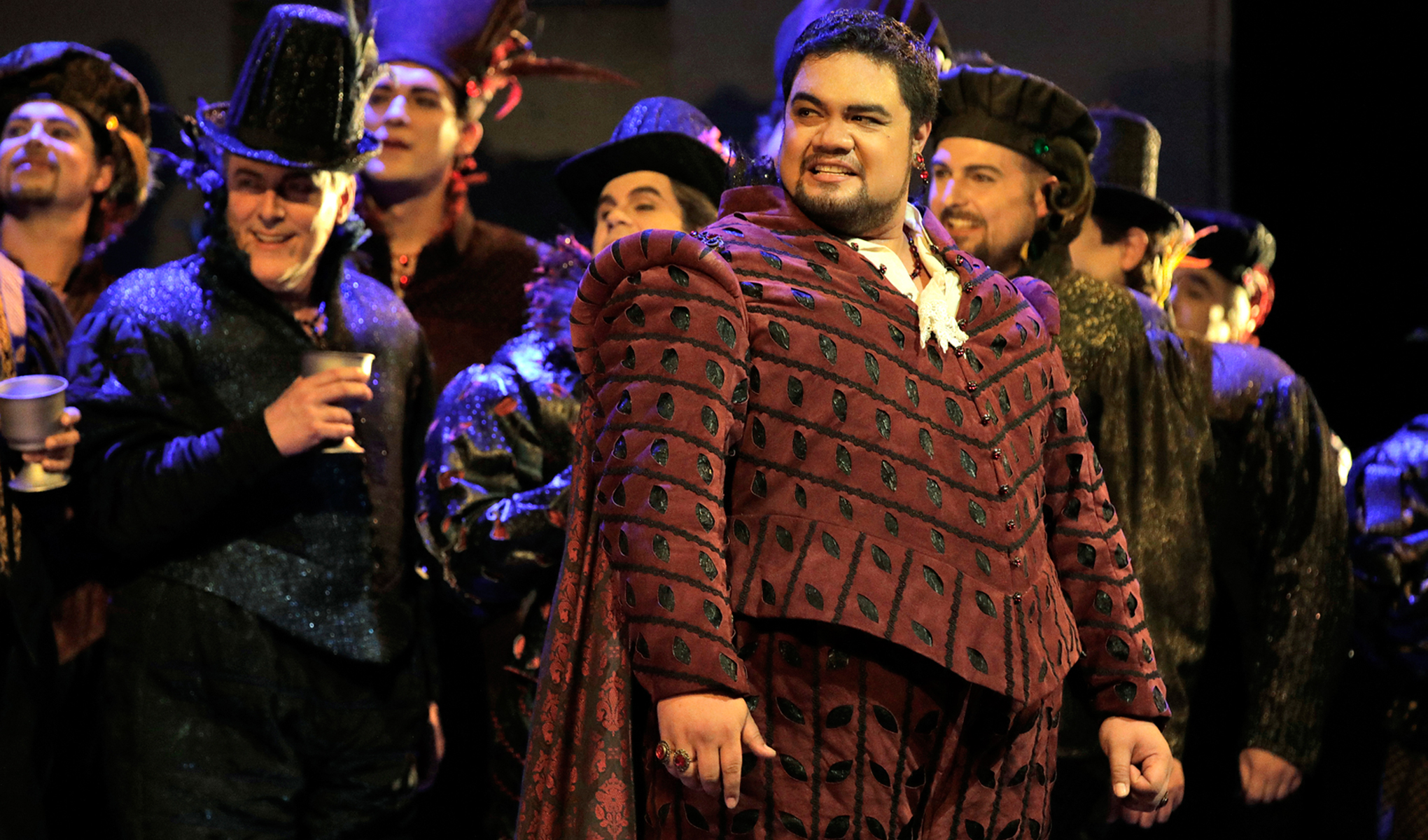
Art critic Robert Hughes describes de Chirico’s city as, “one of the capitals of the modernist imagination. It is a fantasy town, a state of mind, signifying alienation, dreaming and loss. . . . The ‘illusionist’ painters among them, Dali, Ernst, Tanguy, and Magritte all came out of early de Chirico, and in the 1920s George Grosz and other German painters used de Chirican motifs to express their vision of an estranged urban world.” De Chirico’s juxtaposition of the ordinary and the fantastic suited set designer Michael Yeargan’s concept of the piece, so he used the artist’s odd perspectives as a basis for his set design. He states: “In the most simplistic terms, Rigoletto is about a father's curse that fulfills itself. De Chirico’s paintings have a surreal quality that suggests a world of impending doom— that unsettling, airless feeling one gets before a huge storm is about to unleash itself. So when this production was first conceived, we unapologetically used elements from those paintings to satisfy the specific needs of the libretto, while at the same time preserving that feeling of an impending storm—when the father's curse is fulfilled."