

Aida Director's Note
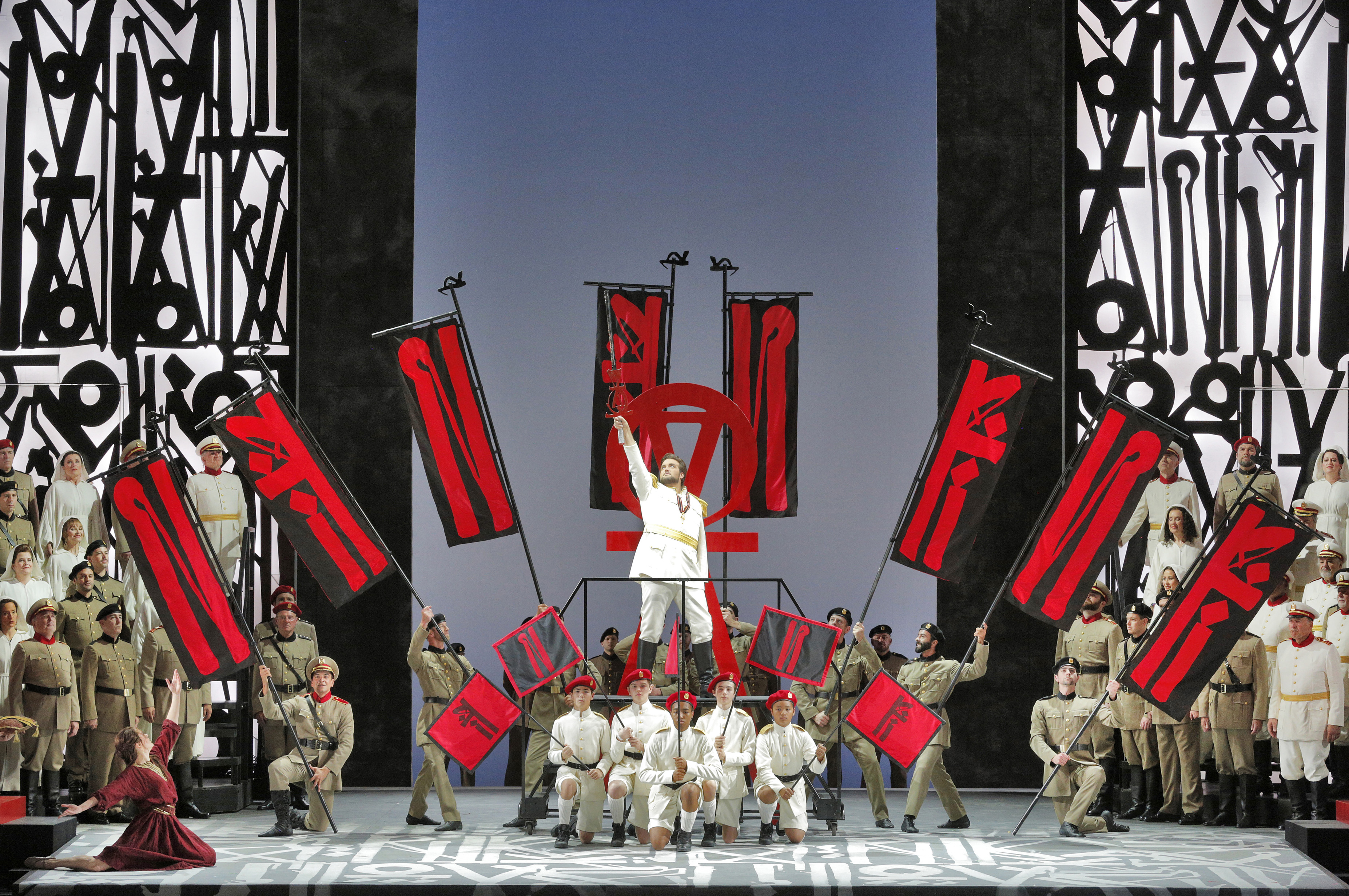
The most famous scene of the opera, the Triumphal Scene, is where we think of the hordes and the elephants, but what is more powerful is to focus on the four individual dramas. There are very few moments when the characters of Aida sing solo pieces. But when they do, we feel a struggle inside each of their introspective moments. With so few arias we are always experiencing the grand emotions of love and war through duets and trios. The story brilliantly sets the individuals and their passions against the context of a society out of their control. I call this the “duty versus desire” problem, something most people are always confronting. Here, though, the stakes are very high.
When we went to work on the designs, we chose to collaborate with Marquis Duriel Lewis (aka RETNA). His work is inspired by calligraphy and hieroglyphics, using bold colors and shapes to evoke a mythic past with a contemporary edge. RETNA created a series of structural works, paintings, and images which set designer Michael Yeargan turned into the theatrical spaces. With costume designer Anita Yavich, we tried to complement the power of RETNA’s work with a rich color palette and costumes which felt like another time and, in other ways, very recent. The movement of the dance uses the language of war and religious ritual.
As I write this in the middle of the rehearsal process, I am still convinced that Aida is a chamber opera. The protagonists and their complex and heartrending personal traumas set against the background of war and religious absolutism make for a passionate Verdi score and drama. This opera lives in a world of emotions, of individuals faced with love, duty, jealousy, and hatred, as well as individuals caught up in emotions they cannot master, and that lead ultimately to a tragic end. The end feels like Wagner’s Liebestod as Aida and Radames are joined in an eternal death.